The problem with inflation is that it can amplify itself. Most people know this, and think of the way people hoard e.g. gasoline if they know a price rise is imminent. This amounts to hoarding a consumer good, ie. the outputs of production. However, that's just one aspect of the problem.
Another issue is producers hoarding inputs to the production of consumer goods: commodities (corn, wheat, cotton, steel, oil etc.). An example of this is the chip shortage that we're experiencing. Before, most companies would have maybe a month worth of chip inventory. Now, they'd prefer to have at least a year's worth of inventory of chips, to secure both the chip price and their ability to even obtain them. That's more than a 10-fold increase in the demand for chips over a very short period of time.
When commodity prices rise, the exact same pattern occurs for companies that use commodities as inputs. With falling or constant commodity prices (as we've experienced for the past 10 years [1]), companies have little incentive to have much of an inventory. With increasing commodity prices, the incentive for producers to hoard them is proportional to the rate of increase in their price†. And the more they hoard the more the prices increase, which causes more hoarding etc.
† This is a simplification. Interest rates play an important role here: if the company's annual expected price increase is greater than the interest rate at which they can borrow, then it's profitable for the company to borrow money to buy commodities.
It's not so much hoarding as setting prices from future expected prices. If I'm writing a contract where I promise to deliver a product during the next year, and I expect the prices of both components and labour to be 10% higher by the end of the year, I of course factor that in when I set my prices now.
When I negotiate my salary for the coming year I of course factor in that I expect my living expenses to be 10% higher by the end of the year, and that I know that my employer already is increasing her prices.
Then everyone does the same, and of course everyone's inflation expectations are vindicated. Rinse, repeat. This is a very tricky trap to get out of. Last time it happened the federal reserve increased the interest rate to 20% and forced a recession just to get inflation back to normal.
> Last time it happened the federal reserve increased the interest rate to 20% and forced a recession just to get inflation back to normal.
I'm not at all convinced that this manoeuvre actually hampered inflation. It might as well have exacerbated it.
When you push up the rate of interest, you make it profitable for businesses whose return on capital is less than the given rate of interest, to liquidate all its assets and deposit the proceeds in a bank account (where you they will earn a greater return on capital). If the given business was producing consumer goods, it was actually helping to keep prices in check. Shutting down this business through the Fed offering its investors free profits -- as opposed to the market offering it profits for producing consumer goods -- doesn't solve the issue of inflation; it makes it worse.
If you in the long run make more money by shutting down your business and put the money in a bank account, then of course, you should do that because it wasn’t a great business to start with. But no one expects the feds to keep the interest rates that high for very long.
It’s only in a near monopoly that a few businesses shutting down will make a big difference on the prices.
But if you shut down businesses, that will increase unemployment, which will keep wages down which will keep the inflation low.
Quite a bit of empirical evidence are by now showing that you are wrong.
Yes, inflation has an inertia all its own, and causes a certain amount of strife as all those prices and especially wages are re-negotiated, since wage negotiation often has to be accompanied by strikes.
The introduction of the Brazilian Real was a surprisingly effective tactic to derail inflation in the previous currency; changing over the currency and promising "this time it's different" actually worked.
> Last time it happened the federal reserve increased the interest rate to 20%
This technique has since been refined and central banks have got really good at controlling inflation through rates. The cost is borne through unemployment being kept above the "NAIRU".
Don't forget salaries. That is what will make or break this theory of "temporary inflation". If it continues for too long people will start asking for more an then it is certainly no longer temporary.
Yesterday at Walmart i bought: shampoo, burger buns, ground coffee, and a bar of chocolate for $28. The cost of everything is ridiculous this these days.
Everything increasing in prices are mostly needs rather than wants too. Not that you don't need any of those thing decreasing in prices, but increasing is housing, healthcare, and education. Those are pretty fundamental needs.
I would argue that most of the western world is already there.
With mass media begin projected from every flat surface, less and less people are actually 'reading' (and I don't consider doom scrolling Facebook to be 'reading'), so we are one large ash pile away from the core message of the book.
You're right, it should have it's own name. It's much closer to drug use. Constantly context switching with high emotionality. "Dopamine streaming"?
It takes a lot longer to put out an inflammatory book and it's harder to actually write one, because it has to be a whole book, not just 3 paragraphs. There was a lot less data easily accessible, meaning you had to have instincts of a seasoned craftsman or luck. The medium itself really did help us out for a long time.
Yup. Welcome to the wild wild west of hedonic adjustment. Things like side impact airbags and rear view cameras basically give the BLS unlimited power to drive down inflation.
It's not entirely an unfair point in the sense clearly a modern car with modern safety and electronics costs more to produce (hence the cost basis). But as far as I know the BLS is basically given free reign to invent the cost basis.
Bear in mind that the chart covers a 20-year period. A 56% rise in prices over 20 years is 2.25% per year.
Why doesn't it make sense to you that this particular basket of goods can rise in price, on average, 2.25% pear year while individual goods in the basket can either fall in price or rise much faster?
The reason I find that confusing is that cars keep getting new safety standards, emissions standards, fuel economy standards. Adding those new features isn't free. But somehow cars managed to decrease in price in inflation-adjusted dollars. Have there been significant technological advances that would allow car prices to decrease in inflation-adjusted dollars?
Additionally, from my own point of view, it doesn't feel to me car prices dropped in inflation-adjusted dollars. This could be a mistaken feeling though.
This graph seems to say cars increased in dollars pretty steadily from 2014 to 2021:
Maybe that's just people switching from sedans to SUVs though. That could also be responsible for my feeling of the inflation-adjusted price not changing, if I was looking at sedans in the past but SUVs now.
The cheapest new car in the US today is a Mitsubishi Mirage for about $14K. Back in 1985 the cheapest new car was a Yugo for $4K. In inflation adjusted terms that $4K in 1985 would be equivalent to about $10K today, leaving a remaining difference of about $4K for the new Mirage. So is a Mirage $4K better than a Yugo in terms of safety, comfort, and reliability? I would say yes but that's a matter of opinion.
Your comment illustrates exactly why I'm confused. You say cars went up in numerical dollars from $4k to $14k. But nimos's second link says that cars stayed the exact same price in numerical dollars, meaning cars should cost $4k today. There's a contradiction.
The increasing standards are a part inflation, at least as perceived by consumers.
Younger generations keep citing cheap housing of older generations. One of the differences is that in 1800, I could chop down some wood, and put up a home, with no electricity, plumbing, or much of anything else. Basic shelter was available to anyone willing to do the work of building a log cabin, and who can afford an axe.
In 2021, the baseline cost includes everything from inspections and licensing, to fancy manufactured insulation, to sophisticated plumbing, to meeting fire codes. It's worth reading about the legal troubles of people trying to live off-grid.
Same thing with cars. If I could, I'd buy a 2021-equivalent to a VW Bug, but I can't.
There's a mandatory minimum standard of living.
This has all sorts of cascading impacts, not the least of which are the power dynamics of wage slaves lacking a BATNA.
nimos's second link says that cars stayed the exact same price in numerical dollars, meaning cars should the same price they did today as they did in the past. You seem to be saying cars have gone up in price. There's a contradiction.
A 1980 Dodge Aspen cost under $5000, and was a large sedan capable of carrying 6 passengers. From a consumer's point of view, a comparable car today -- something suitable for transporting a family with three kids -- is around $20,000, so about 3% annual inflation.
On the other hand, a 2021 Kia Soul or Chevy Trailblazer have features which wouldn't exist on a 1980 vehicle, or only be available on super-luxury models, so if they sold in 1980, they'd probably be $20k. Zero inflation. They have:
* Crumple zones
* Air bags
* AC
* Much better gas mileage
* Power windows
* Touch screens
* Various driver-assist systems
* Cell phone connectivity / bluetooth
* ... and so on
It depends on how you squint; data can paint either conclusion. On a related note, if you wanted a 2021 car with the same amount of steel as a Dodge Aspen, you'd be looking at a lot more than $20k; cars back then were built in ways which required a lot more material (an upside being maintainability; you could pop the hood and do a lot of work yourself).
That's a universal problem in estimating inflation. People buy different things, and products come and go.
How do you compare a house build to 1900 standards to one build to 2020 standards? How do you compare fresh foods from the local farmer to factory-manufactured ones?
People shift preferences based on prices too. Manufactured goods started out as premium products, and now, fresh foods are increasingly a premium product.
It's an impossible problem. People either do their best, or lie with statistics, depending on the domain.
They haven’t decreased in price. The feds instead say, essentially, “hybrid cars and airbags didn’t exist when this metric was invented, so to compare apples to apples we’ll guess at what a 1960’s car would cost if it were made today today” and then invents a number.
A better description of what they do is to make a list of the features that car Modern has and car Old doesn't. Say the airbag. Or anti-lock breaks. Then they look at how much it costs car Modern to add the airbag, using manufacturer's cost of producing that feature. Or how much it costs to have anti-lock breaks. Then they subtract that from the price of car Modern to try to get an apple to apple baseline of how much it would take to produce car Modern without the feature.
Note that this process is not a hedonic adjustment, it's a production cost adjustment, which is what is used to deflate the price of cars.
Then nimos's second link is pretty useless to me. I want to know for example the price in dollars of a typical TV over time. I don't want to know the price in dollars/pixel of a typical TV over time.
A graph comparing dollars/pixel of TVs to the price of college doesn't make sense to me.
Housing costs is interesting (no pun intended) - does that include mortgage costs? with interest rates at near record lows I'd have expected housing costs to have come down.
To be fair, Germany has the lowest consumer prices on food of almost any EU country due to the economies of scale it can leverage, similar to pre-Brexit UK. Meanwhile, Austria and Denmark have the most expensive food prices in the EU while salaries aren't higher than Germany, at least not in Austria. And for the sake of contrast, let's talk about the insane groceries prices in Switzerland (not EU but borders Germany). Romania and Bulgaria have the lowest prices in the EU, but when you adjust to median income, they're actually really high "thanks" to the EU's ease of trade where Romanian/Bulgarian producers can make more money selling their goods to the richer countries rather than locally therefore reducing the local supply, resulting in increased prices for the locals as a consequence.
And, AFAIK, it's the same in North America, with the US having the lowest consumer prices and highest salaries while neighboring Canada has to make due with higher prices and lower wages.
My point is, the perceived expense of goods varies wildly based on your region's economic leverage, so large, rich countries with powerful economies and huge supply chains tend to be much better off at dampening these effects than the rest.
But also regarding Germany: the market for supermarkets is very crowded (Aldi, Lidl, Edeka etc.) where there is a lot of price pressure between supermarkets. So the companies don't profit as much as they could in markets with less competition. The real beneficiary are the consumers.
Germany has huge subsidies on foods so that wages can be kept low, and people don't notice inflation too much. Just think of the fact that people in neighboring countries who live close to the border come to Germany to buy groceries.
Counter anecdote: I noticed various (relatively) recent price increases for essential food items in all major German supermarkets for the cheapest options (store brand), some examples from the top of my head:
canned tuna (single can) 0.99 -> 1.29;
dry noodles (500g): 0.39 -> 0.49;
cake (1250g) 2.99 -> 3.29;
It pisses me off. Everything is supposedly getting more effective, automated and yet everything important is getting more and more expensive. What also is happening is shrinkflation and reduction in quality.
Very similar here in Australia. I recall ten years ago that a hundred dollars would fill a trolley - now the same money gets you about one to one and a half bags of groceries.
Without wanting to distract from your point. Are you / your family spending more time at home and / or changed your buying behavior?
I noticed that we spend more on groceries too, but mostly because we've both been working from home more, and we've also compensated the lack of going out for dinner with slightly more expensive shopping.
Shampoo, chocolate, and coffee are products where you have expensive brands. Having said that, for all those products with fancy brands I would spend 13 dollars in The Netherlands. For cheapest brands only 6 dollar in total.
And it's the same here. Where 12oz of coffe at walmart can cost you $3-20, hamburger buns can cost you $3-20 depending on brand and price, and chocolate can be had for under a dollar, what the OP states tells us literally nothing.
My toothpaste at walmart is $1 for a 6.5oz tube. My old shampoo is currently 88c for 12oz. The one I switched to - nioxin, is $20 for 16oz.
Things at the grocery store are dirt cheap in the US compared to any country in Europe. And the salaries are more. Unless we're talking Ukraine and friends, where carrots and potatoes are pretty much free (while meat is of lower quality and higher price). But they're definitely much, much cheaper than where you are. Hand-trimmed chicken breast, without the rib meat, is $2/lb. Electronics - your price number in EUR is our number. But in USD.
source: I have been to every EU country for work, and lived in several long-term. And am originally from Europe.
> Things at the grocery store are dirt cheap in the US
Grocery and basic goods prices can vary significantly around the US. I live in a rural area where groceries are expensive as hell, in part because a european-owned supermarket chain has been buying up property that could be used for grocery stores, slapping deed restrictions on it that make it unusable for a grocery store, and then putting it back on the market.
Meanwhile I go on vacation to another rural area and groceries are cheap as hell...
Yeah, this seems like a made up explanation for high food prices. Large grocery stores build their own buildings. Like all of them do. Walmarts all look the same, Safeways all look the same, Jewel al looks the same. Those stores buy land, and if anything is on it, they knock it down and rebuild. There's lots of land in a rural area, and Walmart can buy it and build something. Also, not a lot of rezoning going on in the country - and no euro grocer is going to win a fight against a Walmart.
Likely, prices are high because population is super low, and people can buy real cheap at farmer markets where they just sell direct. European grocery stores buying up property in some rural area? That's called a conspiracy theory - blame problems of low population and no easy highway access, because we refuse to vote for taxes that pay for infrastructure on those scheming socialists an ocean away.
Next time when your personal incredulity finds something unbelievable, instead of assuming you must be right and the other person is wrong, just try a simple google search.
In my area property is constrained and in high demand so deed restrictions that only block one industry don't inhibit sales much.
Our population is not "super low"; our county has a third of the population of the largest city in our region of the US.
> people can buy real cheap at farmer markets where they just sell direct
Just because I said "rural" doesn't mean there's farmland.
Your search notes American companies doing that. It also notes it being done in big cities like Chicago. There is zero I see about euro grocers buying up property in rural areas.
So unless you can post a source of your claim - euro grocer pissing away millions by devaluing rural properties, the search link you posted so far quite literally proved you wrong.
I wouldn’t count your expensive example as they are 3rd party sold and shipped, not something that could be picked up at the local store. Very misleading example.
I don't get this - being hyperfocused on completely irrelevant details.
"That blue race car has a low suspension making it hard to drive on the streets."
"Wrong, the car is a navy color, very misleading example."
Yes, the most expensive at the walmart physical store are $7-8 for 8 after tax. The point of the example is that 60 buns are a hundred bucks. The guy never said how many buns he bought. There are 8 per package, he could have bought 3 boxes. The example is that not given quantity the price could be anything, and the OP's post where he gives a total for an unknown quantity or brand of anything, is not useful to support a claim that prices went up.
And let's not forget differences in package sizes. For instance, I could buy shampoo, burger buns, ground coffee, and a chocolate bar for under 7 Euros at Aldi, but that would mean:
  - Shampoo: ~8oz
  - Pack of burger buns: 6 pieces
  - Ground coffee: bag of 2 pounds
  - Chocolate bar: probably the same as everywhere
I highly doubt you can buy 2 pounds (900 g) of coffee, which is a month supply for 7 euros. The cheapest coffee I've seen in Italy is about 2 euros for 250 g.
I buy a single-serving of Lasagne from Waitrose and it's £4 ($5.45 usd). A friend of mine buys the same size frozen lasagne from Tesco and, IIRC, it's 85 pence ($1 usd).
I do agree with the point that food price inflation is real but there are so many varieties of the same product that it's hard to compare random examples.
That's not the point, or sort of is but you're agreeing - you can't compare like for like 'I bought shampoo and a lasagne' because in almost any part of almost any country there's a huge range of possible costs for that.
I agree. A consequence of rising food prices may result in people opting for lower quality alternatives although, in the example above, this is just someone who always buys the cheapest regardless. There are people like this.
Same anecdata here as well. My girlfriend bought >$50 worth of groceries yesterday at Walmart and I couldn’t tell what had been bought today when I was looking for something to eat. These CPI numbers are bad and they don’t even begin to match my experiences.
It's not too many years ago I was used to filling a shopping cart (not overflowing, but pretty full) for more than a week worth of food and it was hardly ever over $100.
These days a hand basket with just a handful of things and I always end up paying $90-$100. Inflation is scary out of control last few years.
Turns out, this is what happens when you give everyone more money.
I'm not against a higher minimum wage. I'm less for these 'covid' checks that go out that a lot of people don't need. But, both of these things mean higher prices for everyone else.
For people upset at this comment: It's literally taught in ECON 101.
As I've pointed out a few times here, people should really continue and not just stop with Econ 101 and think they know everything. Economies are extremely complex, and studying them starts with dumbing them down to rough basics to get an idea of how things work, and then build on top of that.
Furthermore, nobody should forget that the subject of such policies is people. Not just numbers on a spreadsheet going up or down, but real life people who could need to eat, might have children to take care of, need a roof over their heads etc.
When you focus on "people" you get emotionally driven policies without any planning for long term consequences. See: Prop 13. If you want to do what's best for the people, as a population, long term, you need to do what's best for the economy. That means you need to view them as numbers.
It is quite obvious if you take a look at any online crypto/stock trading forum that a lot of those extra stimulus checks are not going towards anything useful. We know from basic economics which you seem to think is invalid that increasing the money supply (through deficit spending on stimulus checks) and money velocity (by giving it to consumers directly instead of through e.g. increasing the supply of credit) increases inflation. We're also seeing record demand for consumer goods like PS5s, electronics, etc. Those happen to be the same products that consumers with excess money buy. Not food, because they can already afford food without the stimulus checks.
Money is both the metric and the target. You know what that does so take everything economists say with a giant pinch of salt, as the complexity in question is entirely artificial and self-service oriented.
1) I'm not against people making more money. I'm definitely for it. I'm against a COVID check I keep getting and don't need, just because I'm married and my coworker is not.
2) I definitely don't think I know everything, or anything really.
3) When a very basic idiom taught in entry level economics proves true again and again, I'm not sure how much complexity is required to prove it false. At that point it just feels like fighting for the point of fighting.
I don't want to debate goods and bads, economic complexities, etc. I am just stating what is taught in entry level classes appears to be correct.
But there's nothing complex here. You are wrong on a very simple econ101 type level.
The covid check was economic stimulus. Like what Bush W did for example. It literally stimulates the economy every time, because for every one of you and me who don't need it and save it, by investing it in companies via mutual funds, there are people who immediately spend it on things like food, also giving money to companies.
Now here's what happens when you don't give money to companies: they have to take loans with interest. That interest is later paid by customers via increased prices, because the supply side cost is now higher.
Companies also go out of business w/o money. You now have less supply, for inelastic demand (because it's food). This increases prices.
So, econ101: prices went up. Because supply chains were affected by the pandemic, and when supply cost goes up, you pay more. If you didn't have the stimulus checks, they would have gone up more. Much more.
Paying attention in econ101 helps know this. What you missed by not paying attention, is they were referring to printing money and Not giving it to people. Like the government having to fund itself, or the king funding himself. A stimulus check is trickle up economics, and Lowers prices. So econ101 taught us the opposite of your takeaway from that class. That class was of course called microeconomics, not econ101.
Car companies shut down production because they predicted low demand which caused car prices to spike. If the president told the car companies that he is going to give consumers enough money to buy cars car manufacturers wouldn't have slowed down production but instead doubled down on producing more, prices would be low because there is enough supply.
since the point of the program was to stimulate production of New cars, which it did, creating an increase in GDP and jobs, the experiment was a success.
If Biden forgives student loans it will not lower the price of tuition. Since the point of student loan forgiveness is to help people get on their feet, and buy houses and cars, it not lowering the price of tuition would also mean a success.
I'm guessing you have a house mortgage. If I pay that off for you, will it lower the price of your house? I guess there's no point in doing it then. Because you wouldn't take that monthly mortgage payment and instead buy more stuff or invest in stocks, boosting the economy. You would clearly spend it on sponsoring a super-spreader own-the-libs rally.
So it's the intention or internal motivation of the money that makes the difference? When I look at George Washington I see the same expression in every bill, but that could be me.
Well, since I explained it, my recommendation is in addition to re-taking econ101, also retaking English - reading specifically. When you give money to people, they spend it by giving it to companies by purchasing products or buying stock. When you don't, companies go out of business and your supply is reduced. Reduced supply is higher prices.
This applies during a pandemic, when the companies doing the supply are going out of business, and when the demand side is out of a job and out of money to spend with those companies.
But, since my first explanation, which is exactly the same as what I retyped here, was not read by you beyond an out of context sentence, I have a very good idea about how your brain works, and why it still makes no sense to you. Now talk a bit about why the vaccine is a plot to take away our freedom. I'm here for the entertainment.
Does Econ101 dig into the differences between demand-side and supply-side inflation? Or what happens when you try to hide the deflationary effects of debt destruction through money printing?
I ask because I'm unfamiliar with the basic curriculum in economics, although in the sciences some of the early concepts that we are taught include:
* Correlation is not causation
* Confirmation bias should be overcome by posing relevant testable questions rather than relying on anecdotes.
> When a very basic idiom taught in entry level economics proves true again and again, I'm not sure how much complexity is required to prove it false. At that point it just feels like fighting for the point of fighting.
Except "your basic idiom" actually turns out to not be true in a lot of cases. It turns out that when you look at cases of notable inflation, these are nearly always accompanied by substantial supply side shocks, and that's also happening now.
If we go beyond Econ 101, what scenario do you envision in 2021 where everyone gets money handed out to them and either (a) prices go down or (b) people get happier?
There is no practical way that handing out more money is going to create more resources. In theory there might be one, but in practice the globe just shut down percentages of the economy in response to the coronavirus. There are still policies in place where people willing and able to work are being mass-ejected from their jobs. Add money handouts to that and the only way to be surprised if prices go up is to be not paying any attention to anything economic.
Except that it is not that simple and that a lot of things that people are taught in ECON101 is wrong, oversimplified to a fault, or biased by an ideology or another.
Assuming that printing money automatically leads to inflation is assuming a lot of things such as all actors constantly making decisions based on the total supply of money, factories running at 100% of their capacity, the money being reinjected into the real economy and a ton of other over simplifications.
To the best of my knowledge, there is no serious work proving the existence of a direct cause-effect relationship between money printing and inflation in the real world. (Using historical data instead of an oversimplified model)
Actually, the euro zone increased its money supply by 5 since the 2000s, prices have only been multiplied by 1,4.
Hyperinflation is a different story, but those things are not caused by printing a few trillions.
The concept is called velocity of money/circulation. It's actually taught in econ 101. It's distinct from money supply. For example you can have increasing supply and stable/declining velocity if no one is circulating it, so there being more money doesn't necessarily mean inflation in those conditions.
The money printed is not going to you. The sort of person that benefitted from the over-abundance of cheap money isn't exactly the sort that's waiting on a $1000 windfall to buy steak and upgrade their TV.
Look at the stock market and real estate and tell me there's no link between the money printing and inflation.
Mostly because what people refer to as "printing money" isn't really printing money, but more of a "reversible exchange of one class of assets for another class of assets of equal value". The central banks are not allowed to just create new money to give everyone working there a huge bonus, it always has to be swapped for a credible promise of future repayment. Banks take it up, since the rates are/were at near 0%, but people/businesses are not confident about their future money flows to take on new loans. Hence the new money just sits at banks and never reaches the real economy.
Helicopter money (1) does cause inflation, but the reason that the inflation has been stubbornly low for a decade is precisely because the central banks are forbidden from doing helicopter money
Is this taking into account the fact that more countries use euro as a currency? Or is this x5 because 50% of that is from there being more countries in eurozone?
And there was high inflation since they started the QE. At least in the financial markets. It might not count for the government's inflation metrics but I don't think those make sense.
Giving people money not to work results in more money and less production. But there's a bunch of people with money, so demand is higher than it'd otherwise be.
So according to this food prices increase because people buy (and eat) more food. With many Americans already overweight...
In any case, do you have any proof that more food is bought? I'm having a hard time believing this, unless people were lacking food previously.
If they didn't spend that money on food, how did those prices increase? Which parts of the stuff that goes into food increased? Links to actual data is severely missing from all the assertions made here. A moderate one-time stimulus check is responsible, really? Because all that other money that was created was not given to many people and I would like to see some data if you want to claim it ended up with them anyway by now. General wide-spread wage increases of according size, for example.
It's the whole economy. Labor costs are up. This drives labor costs in food production/transport/retail up (or else workers will switch jobs). Hence food prices. And demand remaining high is what keeps labor costs up.
So, food prices can go up and down even if food-specific demand is inelastic (that is, even if people eat the same amount and quality of food regardless of price).
FWIW I've found my food demand not to be 100% inelastic -- I have changed where I get fast food as a result of some price increases, and I've found that in times when I'm not making a steady income, I find it easier to maintain or lose weight.
Not to forget that good amount of things like produce was destroyed as supply chain wasn't handling it anymore. It should be clear that just that alone would result in increase of prices as the food need to be replaced with something else. As supply-demand is at least somewhat balanced. Remove from supply side do to supply chain not accepting it, the demand overall is constant, prices go up.
It is a combination of inappropriate fiscal and monetary stimulus that led us to this current predicament. And it is far from over, because inflation is a lagging indicator, meaning it will not be fully realized until much much later.
The addiction the American economy has to stimulus is not unlike a heroin addict. If you were to cut government spending drastically, or raise interest rates dramatically, the economy would suffer terrible withdrawals and most likely cease to function. Conversely, if you stay the course and continue with both fiscal and monetary stimulus, the economy will overdose, most likely causing it to cease to function.
I do not envy our politicians and central bankers. They are screwed either way. And I wouldn’t be surprised if a lot of them flee the country when the US Balkanizes.
There is no room for moral interpretations in economics. The economy is not a living being.
Interest rates are low because investors and savers accept them to be low. If they were truly too low then companies would borrow and invest until full employment happens and wages go up at which point inflation would go up and so would the interest rate.
No such thing happens. Germany has a debt brake and low debt to GDP because they are scared of the interest boogeyman and the only thing that happened is that the yield is zero or negative for every duration up to 30 year government bonds. A lot of people want to save money nowadays which puts downward pressure on interest rates.
If you were to raise interest rates then savers would save even more and the economy wouldn't die from withdrawal effects, it would die from a plain lack of money in the real part of the economy because saving money would be more profitable than doing real work.
Interest rates are low because the Fed has signalled that if the market charges large companies too much to borrow money, they'll just print money and lend it to those companies instead in order to drive interest down to a more acceptable level. Well, that's a bit of a simplification, but it's basically how the Fed's bond-buying program works.
Definitely agree with this. Sadly, it's become political suicide. Doing so would evaporate the housing market, and by extension, the Blackrocks and Berkshires.
None of that is taught in ECON 101. You are extending supply and demand to a domain (money supply & inflation) that is significantly more complex and is taught fully only at high level econ.
I think that anyone should take basic econ classes, you learn a lot. Unfortunately, it's not one of those classes you can 'have a different understanding of' with any seriousness.
Well you see, to be critical of a paradigm, for example modern monetary theory, you have to have a PhD in that paradigm. That’s why you can’t say that god doesn’t exist unless you’re a priest or a theologian. Makes sense to me
No, you absolutely can. Priests are "qualified" through reading religious texts of dubious validity. If anything, they should be trusted less.
I don't know if it's even possible to answer whether a god exists, but it's quite easy to find the flaws in religious stories, and if anyone can answer that question, it's certainly not them.
Are the prices increasing since the hedge funds are investing there (after exiting normal stock market), or because suddenly people started to eat more?
Central banks just gave a lot of empty money to the rich: central bank is now holding thr bag of overpriced stock, while the rich exited and invest in resources.
This you wont even learn in advanced econ lessons, because actions of central banks are barely questioned.
Do you truely belive that poor people suddenly started to eat more?
Other reasons can be a drop in production (e.g. due to Brexit nobody wants to do bavk braking farm work), rising population and aspirations (people from third world also want smartphones, cars and good food), biofuel - which means less area used for food production.. but no, people who received some stimulus chcecks suddenly started to eat more.
> Turns out, this is what happens when you give everyone more money.
Do explain. The cost of essentials is not affected by how much money people have to spend on it.
I mean, richer areas may attract more high-end grocery stores like Whole Foods or whatever, but the base price of food - what this index is about - is not affected by that.
If people can't afford groceries anymore, is that because they have too much money?
I don't want to debate or argue. I'll reply only to attempt to be helpful, but feel free to call me an idiot, I won't engage.
There are two issues at play here. One is that everyone has more money, and two is how everyone got more money.
Skipping one altogether, two explains most cost increases. When wages rise, it cost more to make everything. Because labor costs are higher. The farmer wants more money, the butcher wants more money, the drivers want more money, the stockers want more money, and the sellers well, they always want more money. When you double their wages, as what's been happening in the lower wage section recently, those costs affect the product. This is what many people miss about the minimum wage debate. If a guy stocking cans at the grocery makes 10 and hour, and the guy digging coal out of a mine makes 20 an hour, what happens when minimum wage goes up to 20? Of course the coal diggers want more money too, or else they'll take the easier job. This alone accounts for 'essentials.'
Going back to one again. The issue isn't that an individual person has more money. It's that -everyone- does. So it's not a rich person buying up extra, it's people that normally wouldn't buy a product enter the market.
Regardless what others have alluded to, a rise in demand always means a rise in prices. It's basic supply demand curves that have been studied forever.
An anecdote, rather unrelated: Supply demand curves aren't always what they seem.
A pizza place could turn a profit selling pizzas for a few bucks. Demand initially surges, then recedes as people get sick of it. Turns out, it's worth more to price it so that people only sometimes buy it.
I’m actually not terribly worried about food prices being high. Or the general price level being high. What worries me is there is no political way forward.
Politics used to be about compromise. Nowadays it is about wasting as much time as possible, while not making any meaningful policy changes. This will come back to bite our elected officials at all levels.
> I’m actually not terribly worried about food prices being high.
No, but you are probably middle or upper class in a western country (I'm guessing the US). But there are other countries in the world where half of your income goes to food. For them rising food prices is a catastrophe.
I guess you're talking about the US? Or do you have another country in mind? Lot of places outside of the US have a working, multi-party, dynamic political systems and are doing meaningful changes.
Do they have a safeguard against becoming like the US? By which I mean doubling down on core support base rather than seeking to convert opposition, and using populist rhetoric rather than traditional debate.
If not then it is only a matter of time. A new charismatic leader who says the right things emerges, and system is pushed to breaking point. The US might be the first, but Trump's lasting legacy will be proving to the world that politics can be played this way.
When people have 10 different ideological choices, it doesn't matter as much. I'm pretty sure that the Republican party would be represented by e.g. a Traditional Liberal party, a Conservative party, a National Conservative party, and perhaps small fascist party in any traditional European democracy. And that Traditional Liberal party would also contain a whole bunch of Democrats.
Yes, a multi-party system if far better. But over time, if the rhetoric is "if you aren't for us you're against us" and "a vote for SmallParty is a vote for Enemy" we trend towards two. We justify it to ourselves by saying that although we don't support everything OurSide says, it's far preferable to Them.
Yeah, in FPTP systems such as the American one, the effective minimum required share of the vote approaches 50% in competitive districts (and doesn't even matter in uncompetitive districts).
Meanwhile, in my country a political party only needs 2% of the vote to be represented in parliament and this will grant them approximately 2% of the seats since we use a proportional system. When people know that their votes likely won't be wasted, they tend to not vote tactically, preferring to vote on issues instead.
Anyway, I mostly hear people in FPTP countries (US and UK) talk about transferable vote or alternative vote, but AFAIK these are not really in common use. I think most of Europe uses the party-list system for proportional representation (https://en.wikipedia.org/wiki/Party-list_proportional_repres...).
I'm being an armchair politicologist here, but parties that do that tend to get isolated by the other parties, as a result don't get to govern, and as a result don't grow further. The fact that parties are destined to cooperate also forces them to tone down the "if you aren't with us you're against us" rhetoric.
Ironically, when NSDAP rose to power, this is how their competing parties neutralised themselves (according to what I remember from The Origins of Totalitarianism).
Large(r) parties generally cannot demonize (all) smaller parties all the time. Once you get to the election, you need somebody to go into a coalition with you so you get over 50% of the votes.
Obviously this applies only if your party has less than 50% of the votes, but in multi-party democracies its more unusual for one party to have 50% (or more) of the votes.
In a republic the head of state is usually directly elected; in a constitutional monarchy, the head of state is usually hereditary. Whether the head of state has any real power varies greatly.
The head of government (e.g. the prime minister) is most often NOT directly elected at all, since most multiparty democracies apply parliamentarism, i.e. the parliament has the power to select and remove the head of government.
So the voters focus on voting for parliament members and the head of government is INDIRECTLY elected by the winning _coalition_, so the head of government usually represents a coalition rather than a party. This a bit more dynamic as the coalition can change in between elections when parties realign, sometimes resulting in a new head of government or an early election.
when I said "their ideals and head of state" I was referring to the party, not the voters. I think what you wrote about coalitions in parliamentary system is useful for others, but doesn't add to our conversation. But to continue the discussion, my main counterpoint is that a coalition and coalition chosen head of state still dilutes what any particular voter wanted to happen, as opposed to satisfying at least 50% of the country at any given time.
I don't think it works too well with two-party systems. That is it is possible that head elected is only preferable to opposition, not actually to voters in general.
This is a commonly repeated trope that is 100% false.
In the beginning of COVID pandemic, both Germany (one of the biggest and "slowest" EU country) and US passed very comprehensive laws to counter the pandemic crash. There was very strong bipartisan support, because (1) something needed to be done, and (2) the solution seemed quite obvious.
Since then, there has been disagreement about both whether anything needs to be done, and about what exactly that is; hence, nothing has happened.
In contrast to common fear-mongering, this is democracy working as it should - broadly agreed-upon things happen quickly, contentious things happen slowly or not at all.
> This will come back to bite our elected officials at all levels.
It should, but as recent years have shown, consequences for bad decisions from the higher-ups are laughable and they get away with anything. Democracy is in shambles, and the checks and balances are nowhere to be found.
Yup, gas prices are up 5x in the Netherlands, causing electricity to go up by that much as well. If we have a heavy winter again, we're in the shit. People won't be able to afford heating their house anymore. Companies will go under - some have already shut down production because the electricity cost of their products far exceeds the value of what they produce (aluminium in this case).
The balance has been disturbed and we're heading to a global crisis. And things like energy and food prices - you know, essentials like that - will likely affect the average joe harder than any stock market crash did.
Of course Denmark also has the highest food prices in Europe already ( https://www.dst.dk/da/Statistik/nyt/NytHtml?cid=32175 ), so probably that is why whenever I go to the store nowadays I feel like I'm getting ripped off.
>"it says that inflation increased 1.8% from 1.7% in August. In a lot of EU lands it increased from 2.5 to 3.2 during the same time."
Only 2.5 to 3.2 percent?! That would be great if it were actually the case in the real world, but the government provided inflation numbers a pretty much b.s. these days as the formula and items used for the calculation are always charry-piked by the government to make the final number look good to their voters otherwise they'll be ripped apart come the next election (which politician in their right mind would like telling the citizens that they're all worse off and expect nothing bad to happen? Much worse off).
For the real-world inflation numbers just look at assets like stocks or real estate that have shot up +20% or more.
Yes, this year inflation was highly manipulated by most countries to make it appear smaller. Just search for "Is the Fed manipulating inflation numbers" (do not remove quotation marks)
In all civilized countries the inflation data is collected and processed transparently by a bureau which is independent from the government.
Your cartoonish idea of a minister of economics making a phone call to tell some bureaucrat to fudge the numbers is very far from reality.
In some developing countries stuff like this happens and there are unofficial numbers being published by journalists or dissidents which are closer to reality, but this is really not be how things work in the EU or US.
Please don't put words in my mouth, I didn't say the inflation calculation is not transparent, i said the formulas and the variables used in the formulas are cherry picked to make the inflation seem lower than it is in the real world.
Like how it conveniently excludes real estate prices (as if having a roof over your head to raise a family in, is some opulent frivolity instead of a necessity) but instead includes stuff like the price of the cheapest possible bread which often stays low for longer at the cost of reduced quality.
My point is, you can always choose your metrics well enough to reach a certain target if that's the desired outcome, which is what the whole inflation index has become. Same how my boss can pick my yearly performance targets that can make me either "exceed expectations" or he can choose targets that will make me "need improvement", for the same amount of work I do.
Not an agricultural economist, but I'd bet energy prices and extreme weather. Agriculture is pretty energy intensive, both directly for machinery and also because fossil fuels are used to make fertilizer.
Worth noting that the article states that the current year crop is projected to be a record high:
>For cereal production, FAO projected a record world crop of 2.800 billion tonnes in 2021, up slightly from 2.788 billion estimated a month ago.
So the prices are not wholly related to production, nor mere supply and demand. The shipping container shortage, labor shortages in many countries are more significant contributors.
I'm a bit confused by how this would work. I get that extra money lets people bid up the price of assets like homes, but it's not like people are suddenly going to start eating twice as much breakfast cereal. At least in the western world, there is no shortage of basic foodstuffs and no reason to bid them up.
More money in the hands of investors with the looming threat of increased inflation would lead to investors demanding higher rates of return for their investments at each step in the supply chain. And when the system is flooded with money, you can also expect companies to expand while the cost to borrow is cheap and for new entrants entering and attempting to grab a market share.
More companies or expanding companies vying for more raw material / services leads to higher demand from suppliers (hence the bidding GP mentioned).
There are likely other mechanisms in play too, and probably much simpler ones than this, but this was the first mechanism to cross my mind when seeing your question.
generally, prices are rising, which means workers will demand more money to cover their increased living costs or find an employer who will. (and if house prices are going up, rents are probably doing so as well, particularly as things like REITs have become a whole category of investment products.)
the overall effects can have pretty subtle origins but can ripple through gradually. the worst part about this is, if it happens long enough, inflation can more or less become a sustained expectation and grab a life of its own.
A dollar is worth far less than it was a year ago. Even discarding any other supply chain / production disruptions, things cost more because dollars are inflated.
They have been printing money for more than a decade. And of course all the inflation truthers feel vindicated now. But as the saying goes, even a broken clock is right twice a day.
The paragraph after also notes that even this record production is below demand: "For cereal production, FAO projected a record world crop of 2.800 billion tonnes in 2021...That would be below world cereal use of 2.811 billion tonnes..."
>The busiest US container ports are moving up the global rankings amid record import volumes, but the deluge of cargoes continues to exceed capacity with growing ship queues on both the East and West Coasts.
Last month I was able to get some 4x8 sheets of 15/32 sanded plywood for $33/ea, went back to get more today from the same Home Depot, $45/ea. Prices are still out of wack.
Who would think that central banks pumping money to save the stock market means that this empty money will cause inflation once the rich exit and invest elsewhere (and leave central banks to hold the bag).
QE has been going on 10 years in the West and almost 30 years in Japan without serious inflation. It is not clear that we are witnessing general inflation rather than inflation within particular sectors affected by the global energy and supply-chain crisis.
Japan seems to be in a bad spot in last 30 years and there are some voices that it was all caused by their failed monetary policy. Guess who makes this policy? The central bank.
And the saying that "QE is going withot serious inflation" is a joke - people literally cannot afford homes since investment funds got bailed out (central bank is holding the bag) - and now those funds have free cash to buy out anything: homes, resources..
I’m gonna get heavily downvoted. But one cause of this is the expansionary monetary policy of the US. Money printing has gone wild. And it’s not a coincidence that the last peak was in 2011, after the same phenomenon of money printing and low interest rates put in place after the 2008 crisis.
What is your experience getting negative consensus on saying that in the past?
The Federal Reserve is the biggest whale in the market and the majority of their purchasing transactions create USD that did not exist prior to the time of transaction. Every recipient circulating new USD around. The bigger problem being that most does not circulate from the first recipient, but also a large amount does and the pandemic relief bills allowed different kinds of recipients to get newly created Federal Reserve USD who did wildly circulate those USD causing massive distortions in different areas of the economy.
While what you say is probably true, I've recently had a talk with a coworker who worked for a month in USA and one of the things that impressed her most was how much food is thrown into the trash in USA, food prices rise everywhere around the world.
For me the most obvious explanation is export of inflation from USA: USA printed abnormal amount of unsecured money, and since USD is a world reserve currency, prices begin to rise everywhere. USA doesn't produce enough goods and services to offset the amount of money they print. With every start of their money printer the whole world becomes more poor.
I wish there would be a way to somehow disconnect the cancer tumor of USD from the rest of the world. But I'm not an economist and don't know the way to do it and what if the owner of the next currency chosen for reserve currency start to exploit its position for their own benefit like USA now.
> I've recently had a talk with a coworker who worked for a month in USA and one of the things that impressed her most was how much food is thrown into the trash in USA, food prices rise everywhere around the world.
> For me the most obvious explanation is export of inflation from USA:
No, its just the wealth of the USA and how much the US throws into the trash. The US literally bids up world food prices and both eats a lot and also destroys a lot.
> With every start of their money printer the whole world becomes more poor.
That...makes no sense. There are some countries domestically using the dollar, but for most of the world that would just drive down the dollar against the local currency; even if inflation made people poorer in general in the system using the currency (it doesn't, except people with assets fixed in the currency), it wouldn't make people using other currencies poorer.
> it wouldn't make people using other currencies poorer.
My country produces gas, oil, lumber, food, metals. When USA prints another few billions, they can simply come to any company producing these resources, and offer higher price. Because the money doesn't cost US anything: they just printed them.
For the local company it makes more sense to sell to the US customer at higher price than to local customer at lower price in local currency.
So, when US prints another billion, it means that local companies experience resource shortages and rising prices, because everything is exported to USA.
To add insult to injury, money earned by the exporters almost never end up in the local economy. Exporter just hoard them in offshore banks.
This scheme of things is extremely beneficial for the US economy and inimical to all other economies in the world.
People switching from more expensive quality food to junk food, which is likely to stay affordable, won't reduce obesity rates. I would even expect obesity to rise after such switch.
That's because some people decided that the UK would be better off outside of the EU, not realizing how much they depend on free trade and movement for their essentials.
I mean I can't even blame those who voted to leave, they were not informed and convinced by a massive propaganda campaign. But I can blame the politicians that pushed ahead with it, even though it was based on a small majority vote in a non-binding and un-nuanced referendum. These politicians should have done better and they knew better, they of all people should be able to grasp the larger / longer term effects.
I mean some people voted to leave because they don't like eastern-Europeans, immigrants and refugees, not realizing they're a backbone of infrastructure. People don't like when "they tuk er jerbs", but they're not willing or able to drive a truck themselves.
I distinctly remember one year ago or so commenting on an M1 money supply thread on HN, musing that inflation was on the horizon, then getting dogpiled by dozens of people accusing me of not knowing the definition of inflation (they did not understand that asset inflation is also inflation).
At the time I was one of the people doubting the policy of giving people free money as "pandemic relief" instead of just ending the lockdowns and letting small business owners and employees engage in society at their own (relatively small) risk. I was accused of being ignorant and selfish.
Now the chickens have come home to roost and there are people raising concerns for how this will affect the poor when it was likely those very same people who supported the policies that have caused this inflation in the first place! Ironically if we had listened to the "selfish rich westerners" who opposed the policy of unchecked "pandemic relief" for the poor there would be no current looming threat to the poor.
Many who claim to care for the poor will read this comment and continue to accuse me of being selfish and ignorant without the least bit of self-introspection on how their own worldview contributed to this very situation. That is the reason that inflation will only continue to worsen and the poor will be in an ever worse situation.
I would really just like to see a single person admit that they might have been wrong about maybe 1% of all of this. Feels like we've been doubling down on idiotic principles for the last 2 years now.
i got a pizza from the store the other day and the damn thing looked smaller. i thought i was just tired until i got a closer look and saw the weight, yup, 2 oz less.
Uh oh, high food prices generally correlate with increase in civil unrest and political turmoil, especially in areas where a significant percentage of income goes to buying food.
To be honest things are looking too bleak at the moment. Life is already hard when we consider everything is based on rent seeking culture and huge relative taxes to poor people. To add more I guess too many people aren't motivated to do laborious job when they can easily earn money by learning some html/css in computer for 1 years. My friend who is completed bachelor in physics is now doing computer jobs here.
I think we need some economic reform otherwise it is going to be harsh. Just printing money as much as we want is not a solution.
It sounds you are generally venting when the specific topic was price of food. I don't understand what labour shortage of frontend developers has to do with that.
West has become hyper selfish and unaware of their shutdowns in spending and travelling and not redistributing vaccines vs vaccinating kids and getting third shots in. People scared to go out with 10 cases on per cent of the 100k while third world countries have essentially 0 vaccinated.
This is unrelated mostly to the topic of food prices though?
FWIW as you claim west "has become selfish" can you name a period, say, in the last two centuries when 'the west' would have been less selfish - I mean it looks to me like west has always been 'selfish'. I think as 'we in the west' are generally brought up to believe unselfishnes is a virtue we as children believe our societies express this value in all of our endeavours. As we grow up we realize our rich societies don't really work in a way that would facilitate egalitarianism across whole mankind.
That said, geopolitics are hard and problems should not be assigned to some basic, unredeamable sin of avarice but preferably to actionable things that can be changed.
The "West" has donated 100s of millions of vaccine doses to other countries. The US alone has donated 176M doses. Hardly my definition of "hyper selfish".
The U.S. blocked the export of substances needed for the production of vaccines.
A question, if I donate after I have had enough am I being selfish?
If I donate food after I have eaten my fill, am I being noble or selfish?
A question in response to your question: is putting on your own air mask first when the plane cabin loses pressure, and then helping others with their masks noble or selfish?
Giving someone something you have no obligation to give them for free is literally the definition of generous. It is the opposite of selfish.
This doesn't change if you take care of yourself first.
You can't simply compare a single person with nations.
And you aren't only putting your mask on first, you are preventing others from getting theirs.
And if the west if obligated to help the poorer countries is a different discussion, especially of you consider how it takes care of them when it comes to their natural resources.
Exploiting with the left and giving with the right, doesn't make you generous.
> AstraZeneca is one of the shining stars of the pandemic. Not only did it produce a vaccine where other big players failed, the UK-Swedish company has pledged to sell it at cost until it is able to declare the pandemic over.
If countries still can't afford it they are being given away
That's one vaccine and one country, and you're not arguing against my point, but shifting the discussion back to donations. The number of vaccines being donated are not even close to sufficient to protect the countries without the means to produce the vaccines.
Many countries could produce these vaccines, but are not legally allowed to because we're protecting the patents, so that companies can make profit on them. Without patent protection, they wouldn't be the only companies manufacturing them.
It's also strange to say it's entirely false, while giving one example in which the vaccines are being given at cost. Many of the vaccines are not. In some cases the companies are not profiting, in other cases they are.
Why don’t countries with no vaccines develop and produce their own? Ah, that’s right, because they don’t have cutting edge pharmaceutical industry. Now, isn’t it an interesting coincidence that cutting edge pharmaceutical industry exists precisely in those places where most profit is to be made on drugs?
The west basically "developed" by exploiting/colonizing resources from the 3rd world countries. The west basically pulled the ladder once it climbed up. Now you are wondering why the 3rd world countries can't develop their own vaccines.
Here's a few articles about them exploiting Asian migrant workers. They're both from this year, I can't imagine that the conditions have gotten better over 80 years. Not to mention that with the current state of market globalization, one could argue that simply by participating in international commerce your benefiting from some group being exploited somewhere in the global supply chain.
And as an aside, modern capitalism as it stands right now almost necessitates some group be exploited in order to produce cheap labor/goods for consumption for another wealthier group, and the exploited group is most often a poorer country and the goods/labor are then imported. You're not gonna get very far paying your workforce a living wage to produce things that people making that same living wage need to buy, not with the percentage of profit modern owners/shareholders take right off the top.
One group being wealthier than another group does not automatically make interactions between those two groups "exploitation" / if that is the definition of exploitation that you're using it is practically meaningless.
You could try reading the articles I posted for some examples of what I consider modern exploitation. Terrible working/living conditions, paying less than minimum wage, etc, and they get away with it because the exploited lack the resources to fight for their own rights, and general apathy of the rest of their society that enjoys the cheap goods/labor the exploited produce ensures that no one else is incentivized to stand up for them.
edit: And that's just more modern examples exploitation, Western society didn't suddenly spring forth into existence in it's current state of being. If you wanna talk about how exactly Western society reached its current level of wealth and privilege I'm more than happy to talk about that as well.
> And as an aside, modern capitalism as it stands right now almost necessitates some group be exploited in order to produce cheap labor/goods for consumption for another wealthier group, and the exploited group is most often a poorer country and the goods/labor are then imported.
Which certainly does not follow from the articles you linked.
Yours is a strawman argument. I was talking specifically and also have mentioned the west as colonizers.
Moreover if we are talking about South korea, they have benefited from US backing.
"International relations between South Korea and the United States commenced in 1950, when the United States helped establish the modern state of South Korea, also known as the Republic of Korea, and fought on its UN-sponsored side in the Korean war" [0]
Of course they are fully developed now and may not depend on US backing. Even Japan after WW2 was helped by the US in reconstruction [1]
So in essence unless one of the "developed" countries helps you get a head start, you either develop slowly or not at all. Since all the tech and trade agreements are controlled by the established dominant players
The "3rd world countries" resources were plundered and utilized for the development of the colonizers. The "3rd world countries" if left with their resources would have traded what they had and become "developed"
No, colonialism very much happened, it’s just the impact of colonialism on colonizers was much smaller than on the colonized.
All of the colonizer countries were much wealthier and technologically advanced before they started colonizing. The disparities were already enormous in 1500, before much of colonization happened. English, Dutch and Spanish became colonizers because they were more developed, not the other way around.
The “plunderers” had way more resources than the “plundered”: look at the trade volumes between England and its Indian colonies, and compare them with the volumes of domestic production in England: the latter has always been orders magnitude bigger than the former. It’s even more lopsided with African colonies.
Next, the little that the colonizers got out of the colonies were not “treasures” that were “plundered”, hindering development by victims of colonization. Spanish got a lot of silver from Argentina, but the silver was basically worthless to the natives, and had they kept all of it, they could’ve made more plates and jewelry, which in no way could have made them richer and more developed. In fact, metal oriented policy of Spain probably was detrimental to them too. But, if not the Spanish, the indigenous would not have worked Potosi mines anyway, so it’s moot. Most of physical resources that colonizers removed from colonies were like that: of what value are minerals in the ground, if the natives cannot extract them or make use of them?
Most of the actual use of colonies was cultivation of land and exploitation of human labor, often forced. These were overwhelmingly seriously underutilized by the natives. It should not need to be said, but knowing how obstinate some people are here, I’ll say it anyway: this underutilization in no way justifies colonization. Rather, the point is that the colonizers did not “plunder” land from colonies (because you can’t carry it away), and the amount of labor exploited was in almost all cases very small relative to the total workforce of the natives.
Finally, there are many countries that successfully developed without serious colonization effort. Consider Germany: it had some colonies, but only got them in late 1800s, and only keep them for three decades. It would be ridiculous to argue that Germany is now rich and developed thanks to these three crucial decades 1890-1920, when they held some colonies in Africa. In fact, they not only did not get wealthy by exploiting these, but most likely it was a net loss to them, considering the expense required to set them up.
All of this is not meant to excuse or justify colonization. Clearly, conquering and subjugating other nations by military force is wrong, according to our today’s moral standards. The point here is that the idea that it was the colonies that allowed some nations to become wealthy and developed, is simply wrong, and betrays lack of familiarity with economic history of the world.
I hope you're trolling. This would have been a Masterpiece of trolling actually, except that it touches a sensitive topic that's literally about the death and lives of billions of people in the last 500 year of western colonialism, and about one of the most barbaric genocide in the history of humankind.
It exploited the "we have nice capitalism"-wall build against socialism. Basically all along the border, there was a gradient to be exploited for starting up. I assume alot of players near china are waiting for the same sort of ladder to climb up on, once the 2nd cold war starts.
Yes, people really need to read history. The statement upthread, "Why can't they build vaccines of their own?" sounds akin to "Whey can't they eat cake, if they can't have bread".
Even if they build vaccines, it is not held to the same standard, for ex: India's covaxin was not being accepted for travel to western countries. The dominant players set all the rules.
Unless we understand why/how we are in this situation, we will keep on making the same mistakes again and again
My understanding is that Israel paid well above market to go to the front of the line, Japan is definitely paying for doses... do you have links to authoritative primary sources on this (e.g., not a news organization or activist group)?
What does Israel paying above market rate to "go to the front of the line" or Japan "paying for doses" have to do with whether other countries are donating doses to impoverished nations?
> do you have links to authoritative original sources on this (e.g., not a news organization
When has ethics meant anything in international affairs? Sorry to burst your bubble, but every nation is out for its own best interests, which sometimes align with other nations' interests.
Rich countries (e.g. US, Israel, Japan) paid extra to get doses first, then once they had enough, the US (and probably other countries) paid for doses for poorer countries.
>The United States continues to make great strides in its efforts to distribute safe and effective vaccines globally. We are happy to announce our donation of 1,182,870 doses of the Pfizer COVID-19 vaccine to Angola on August 24 with our partners GAVI and the African Union.
It's an odd kind of donation though... Many of those countries are perfectly able to afford their own doses... But are blocked from doing so in favour of being given donated doses, that normally come with political strings attached.
Some would say it's a way for the west to buy influence rather cheaply.
What do you mean by blocked? They don't want to pay because they want to get them for free? Or is there some supply problem where sellers refuse to sell to them?
I think he means thing like the governments forcing producers to fulfill their contracts with them before exporting and fulfilling contracts elsewhere.
> unaware of their shutdowns in spending and travelling
Plenty of journalists have been covering shifting spending patterns since the early days of the pandemic, and its effects on economic sectors and local, regional, and national economies.
"more kids die from traffic crashes", you say, and whine about how people think you're anti-vax. Nah, you're objectively, provably wrong, as demonstrated by someone in that thread, and yet here you are a day or two later still whining about how we're wasting resources "vaccinating kids."
Nevermind that you seem to think that we shouldn't vaccinate people until more of them die from COVID than traffic collisions (which for many age groups is the top cause of death)?
You are stunningly poorly informed every time you write a comment here.
You are often wrong, have poor logic/reasoning skills, and maybe you are not qualified to be forming strong opinions about the things you are talking about, at least until you make some effort to educate yourself from objective, fact-based sources, instead of just believing conservative memes you see on Facebook because they fit your worldview.
> This year FED started to manipulate inflation rates:
Inflation is calculated by the BLS, not the Fed.
> Instead of 12-month base they used 18-month base.
Not sure what you are referring to. There are many different time series, and year over year is still one of them.
> They removed 31% of goods with highest inflation, but only 24% of goods with lowest inflation.
Again, I have no idea which time series you are referring to, but the CPI basket is regularly recalculated according to standard methodology and according to fixed schedules. The basket changes otherwise we'd be measuring inflation based on the cost of 8-tracks and shag carpets.
The methodology of updating the basket according to pre-specified criteria has not changed. The only issue with the current recalculation is that the basket may have been distorted due to unusual consumer behavior as a result of covid (e.g. less money spent on dining out, plane tickets, more money spent on home delivery, etc). But if they would have skipped the recalculation then there would be even more conspiracy theories about the BLS changing their methodology.
However I can tell you that it is not unusual to drop more expensive items from the consumer basket and replace them with cheaper items, provided that the substitutions reflect observed consumer behavior. For example, we don't include home milk delivery prices or handmade shoes in the consumer basket anymore as people have substituted away from these products to cheaper alternatives. It is because of these substitutions that the basket needs to be regularly updated to reflect the basket of things that people are actually buying rather than what they used to buy 20 years ago.
Really not sure why there are so many CPI-truthers out there. The BLS and the BEA are transparent and professionally run organizations, yet they are punished for disclosing their data and methodology as it gives people even more fodder for wild speculations. There's something about government time series that brings out these tendencies -- like how all those H.6 releases regularly trigger panic about the dollar collapsing.
Not a big surprise. Transition to CO2 emission-free economy will be very, very costly. This is just the beginning. People don't realize this yet, one day they will connect the dots and will be angry - they were promised a better World, instead they will be poor, in addition overall World emission will not drop, since many countries (China, Russia, other Asian countries, Africa will join the club too soon) does not give the slightest crap about CO2 stuff (just check carbon tracker website and check plans for new coal power plants that will built in Asia soon).
People need to understand that we can go the route Greta Thunberg, "Fit for 55" advocates want, which basically means moving western civilization back to XVII century, but then the spending's structure will be also the same as in XVII century. 90% of income will go to food, no more fancy vacations, no more iPhones, 0.1% of the population will be wealthy, the rest will leave at the edge of poverty.
That's why any CO2 emission lowering initiative that does not take into account economical reality and puts large part of the population into poverty is very dangerous. It can lead to serious social unrest, the rise of populist parties, which will revert all the pro-eco regulation, leading to even more CO2 emission at the end.
This is not the first time Eco-activists let us down. Their (largely successful) war on nuclear energy plants moved us to the point where we are now in terms of CO2 emission. For the past 50 years there was hardly any significant research done on nuclear energy and those who worked in the academia on the subject were treated almost like holocaust deniers. No surprise nuclear energy plants are still very expensive and we don't have good use for nuclear wastes (which are not really wastes, they emit energy that could be reused with the right tech).


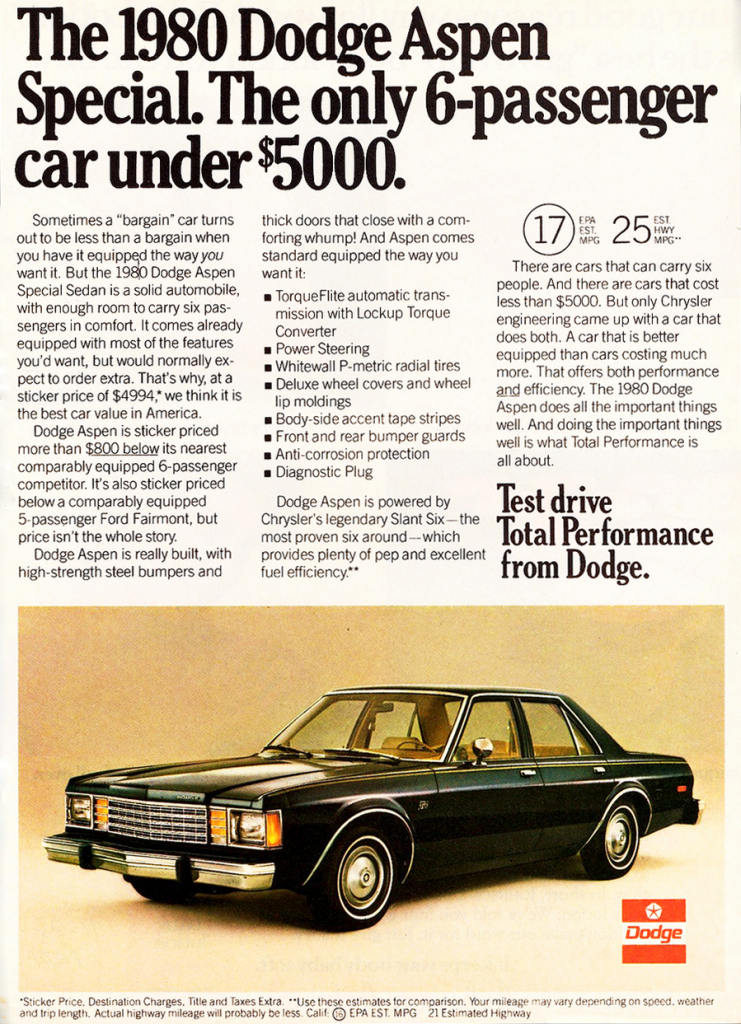
Another issue is producers hoarding inputs to the production of consumer goods: commodities (corn, wheat, cotton, steel, oil etc.). An example of this is the chip shortage that we're experiencing. Before, most companies would have maybe a month worth of chip inventory. Now, they'd prefer to have at least a year's worth of inventory of chips, to secure both the chip price and their ability to even obtain them. That's more than a 10-fold increase in the demand for chips over a very short period of time.
When commodity prices rise, the exact same pattern occurs for companies that use commodities as inputs. With falling or constant commodity prices (as we've experienced for the past 10 years [1]), companies have little incentive to have much of an inventory. With increasing commodity prices, the incentive for producers to hoard them is proportional to the rate of increase in their price†. And the more they hoard the more the prices increase, which causes more hoarding etc.
† This is a simplification. Interest rates play an important role here: if the company's annual expected price increase is greater than the interest rate at which they can borrow, then it's profitable for the company to borrow money to buy commodities.
[1] https://fred.stlouisfed.org/graph/?g=HBTZ