1. The IPAD might did some cannibalization to the mac market but in general, it brought much more profits.It was a pretty good bet that this what it would do(esp. considering apple's supply chain strengths, expected prices for android and IPAD tablets, apple's marketing value and ecosystems, etc).
2. The iPhone was launched when it was clear that mobile phone would integrate MP3 functions, and the iPod market would die. But it was more profitable than the iPod, so no dilemma here.
The real test for the innovator's dilemma is:you develop and sell a new product that might HURT your profits ,but is the future of the industry because it's better or cheaper, and you understand that having some some slice of the(smaller) future is better than nothing.
1. Creating the iPad was not a good bet that it would create profits. Microsoft had tried pushing tablet computing for a decade, and they lost a lot of money doing so. The iPad was a gamble. It was not obvious, people scoffed when it was announced. "No keyboard? No SD slot? Why would I need that when I have a laptop and an iphone?"
2. Again, people scoffed when the iPhone was released. There were already phones with MP3 functionality. It wasn't clear that the phones would kill off the iPod as the iPod allowed you carry your entire music collection with you. Smartphones back then couldn't do that, nor could the iPhone for that matter. No one at the time wanted to use touch screens. The reaction was also a lot of scoffing. "You want me to pay how much for a cell phone that doesn't even have keys?!?". The iPhone was a huge gamble too.
You're talking about the bet: will our products would be successful? That's the kind of bet you have to take when you develop products, no way around it. And apple is pretty good at those gambles.
I'm talking about the bet: if this product would be successful, will we make more money , or less money(due to cannibalization) ?
Also , regarding MP3 phones. it was clear(due to moore's law), that mobile phones would have good enough MP3 players in the future.
>2. The iPhone was launched when it was clear that mobile phone would integrate MP3 functions, and the iPod market would die. But it was more profitable than the iPod, so no dilemma here.
The real test for the innovator's dilemma is:you develop and sell a new product that might HURT your profits ,but is the future of the industry because it's better or cheaper, and you understand that having some some slice of the(smaller) future is better than nothing.
I disagree with your point that the iPhone was clearly going to be more profitable than the iPod. Data plans were expensive and the speed of AT&Ts network at the time of original release was horrendous. These obstacles alone were enough to kill the iPhone. Dropping the price from $699 to $299 and now lower really drove the explosion in demand. The margins they made on the iPhone at this point, I imagine, would call your claim into question.
Additionally, the iPod was not a one dimensional device. Apple made its real money off of iTunes exclusivity. The first gen iPhone was an insanely expensive iPod at the time with the added cost of a data plan. Apple absolutely crushed it when they created the App Store. The App Store is what ultimately catapulted the iPhone's profit margins way past the iPod. The world would look very different if the iPhone had remained an internet enabled iPod and cell phone.
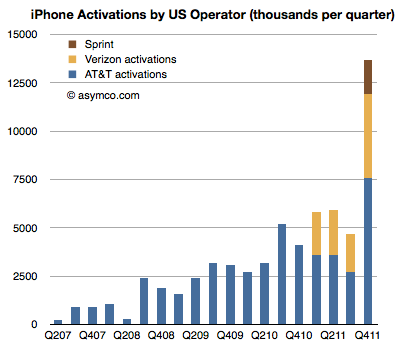
But in Q? 2007, aka date of the first iPhone release, success was not imminent. All I am suggesting is that you compare apples to apples instead of apples to oranges. You have to look at the market at the time they released the iPhone.
From this information it is clear that the iPhone was not imminent threat to the iPod, at the time of its release. It took a full year for activations to pick up.
None of this takes into account, as I said earlier, the iPod was valuable to Apple because of the iTunes Music Store.
The iPhone was too expensive in its early stages to replace the iPod as a music player. Apple took an enormous risk with the iPhone.
I'm the author of the article, I'm working with Clay at the moment. Thanks for the comment.
It's subtle, but I think that most people outside of companies assume that decisions get made as you're describing above — separate questions of "will this product be successful", and "will we make money out of it". In part, the dilemma is borne out of the fact that for almost every company, those aren't separate questions at all. Think about it; you're the CEO, and someone comes along and says, "let's invest this money in new R&D for a product that may, or may not, work. if, by chance, it does work... it will take out our existing product, and we'll end up making less money on the new product than we do right now on the old one".
very few CEOs will put money down on that. they're using money from their cash cow to do what... to kill it?
the problem is one of perspective.
there's another famous example i love to quote when explaining: blockbuster and netflix. when netflix came along, blockbuster was this huge organization with massive margins and almost 100% name recognition. they looked at netflix, saw a new business emerging with a fraction of the margins that they had... why would they bother wasting their time on doing something like this? they could invest to create a netflix competitor, but if they did, it was going to cost them to do it, it may or may not be successful, and if it WAS successful, it would cannibalize their existing, high-margin business with one that was much less profitable. who would go for that?
the mistake that most companies make is that they assume that they're the only ones that are capable of challenging their existing business with a disruptive entrant. the problem is (and it sounds obvious, but so many successful companies have fallen into this trap): if they don't challenge themselves, then someone else will. from the perspective of blockbuster, with all these profitable stores dotted all around the country, the "DVD by-mail market" was not at all attractive. but to netflix, which was looking at the market from the perspective of "we don't have any business at all, so any business is great", the margins actually looked pretty good. blockbuster thought its choices were "stick with high margin business, or move to low margin business". but really, its choices were "move to low margin business, or go bankrupt".
that's the perspective thing i'm talking about; successful businesses have this tendency to view markets from the vantage point of where they stand right now. what's so noticeable about apple is that they never do that. they start from a fresh sheet of paper — what's best for the customer, not what's best from our bottom line. it's a mighty hard trick to pull off.
hope this helps. thanks to everyone for voting up the article.
James,
I really appreciated the article and the additional explanation.
I tried to figure out a way to word this question, so forgive me if it isn't clear but:
Did Steve Jobs even do the right thing? What I mean by that is that if you had 10 companies would you want all those CEOs making what seems to be illogical decisions in the off chance you get an Apple?
Take Blockbuster for example, sure they obviously did the wrong thing in hindsight, but no one, and I mean no one thought netflix was going to be as successful as it was when it first started. I remember thinking, gosh, that is a lot of mailing expense for $7/month.
How many ideas came along and went that were not worth replicating? I'm sure there are tons.
There is probably some new network being worked on right now that will displace facebook in 10 years. Should facebook radically change the way they do business to adopt to that new basically unknown threat?
> separate questions of "will this product be successful", and "will we make money out of it". In part, the dilemma is borne out of the fact that for almost every company, those aren't separate questions at all.
NOT unless you are looking at Silicon Valley companies. Here both these questions ARE different. Think Facebook, Twitter etc, the "success" (and implied "scale") is more important than whether there is a direct or immediate revenue source. That is why we see BIG disruptions in Silicon Valley and not elsewhere. Generally, VCs bear the cost for growth period and entirely new markets are created. Just because the "innovators" were not burdened with the question of making money from the get go.


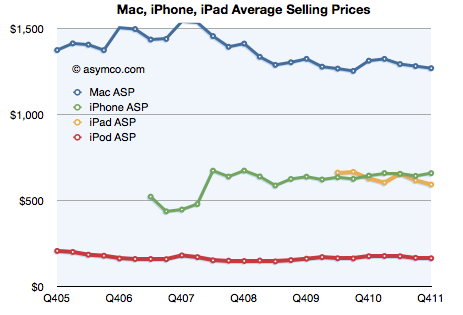
1. The IPAD might did some cannibalization to the mac market but in general, it brought much more profits.It was a pretty good bet that this what it would do(esp. considering apple's supply chain strengths, expected prices for android and IPAD tablets, apple's marketing value and ecosystems, etc).
2. The iPhone was launched when it was clear that mobile phone would integrate MP3 functions, and the iPod market would die. But it was more profitable than the iPod, so no dilemma here.
The real test for the innovator's dilemma is:you develop and sell a new product that might HURT your profits ,but is the future of the industry because it's better or cheaper, and you understand that having some some slice of the(smaller) future is better than nothing.