>(...) Intensity is inversely proportional to the square of the distance from the source of that physical quantity.
Shit gets dimmer at the square of the distance. So if at a distance of 1 a thing has a brightness of one, at a distance of 2 it has a brightness of 1/(2^2), or 1/4. At a distance of 8, you are looking at a brightness of 1/(8^2) or 1/64th.
Voyager 2 is ~122 AU distant. So the sun's apparent brightness would be 1/(122^2), or 1/14884, or 0.00067 % as bright as the sun as perceived at the earth-sun distance (ignoring the atmosphere of course).
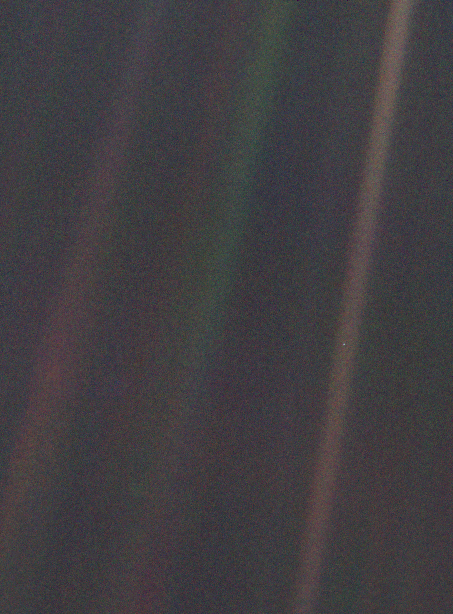
Voyager snapped a picture of our Earch (sorry I thought it was the Sun) in 1990. It's the famous Pale Blue Dot picture. It's the small blue-white speck (or almost pixel) halfway down the brown band on the right.
https://en.es-static.us/upl/2012/07/Pale_Blue_Dot.png
EDIT: Ooops, sorry - this is Earth and not Sun :-(.
You should look up or play Elite Dangerous, it's (I believe) a fairly accurate / to scale simulation of solar system navigation. You can go at several hundred times the speed of light and you're still waiting for ten minutes to reach your destination.


This blew my mind. Do you have a reference that talks more on this topic?