The Count of Monte Cristo, by Alexander Dumas. I'd read thousands of books, novels, and other literature and never had an answer to "your favorite book?" and thought I just wasn't meant to ever have one... Until I read it. Since then, I've bought copies solely to have on hand to gift to people I actually care about.
To drive home the point of just how much I loved this book, I went on to learn French just so I could read it in the original print.
Make sure it's the full, unabridged edition (1200 or 1400 pages), though!
(Just to throw in a nonfiction title as well, Bill Bryson's A Short History of Nearly Everything is a great gift for scientifically-inclined minds (esp younger ones) looking for a first foray into the world of nonfiction, wittily-written and well-narrated.)
Dumas originally wrote The Count as a weekly story for the newspaper. Hence, each chapter ended as a cliffhanger enticing the reader to wait and then buy next week's issue. I works like a charm. One of the best I ever read.
I've read it in a nearly uninterrupted reading binge of 3 days and 2 nights. In fact, in my recollection there's a cliffhanger at the bottom of each odd page :)
> I went on to learn French just so I could read it in the original print.
That is one of my mom's favorite books! Can you please elaborate about the process of getting there/how much practice it took to get you towards the point where you could enjoy The Count of Monte Cristo in its native French?
Right now, I am studying Spanish and my reading comprehension in Spanish is low. It is not enough to understand something like 'The Little Prince' (in Spanish) to enjoy it.
YMMV, but I've noticed that you can actually read books in foreign languages quite enjoyably without a perfect grasp of the language. If the book grips you, words or even paragraphs you don't understand stop to matter. Sometimes it will take a couple of pages of "oh shit, I don't know what this is saying at all" before you get into it, though. (Reading it on an e-reader for the instant dictionary does help, of course.)
One of the interesting things about Monte Cristo and actually about a lot of 19th century French literature is that there's very little archaic French in there, and I found it easier to read (though still not easy!) than many modern novels that use French street slang / argot.
I am not OP, but I've been studying French for 7 years in school before I read Monte Cristo in French, and it was still a very challenging read - to the point of being more work than pleasure. It is full of old grammatical forms and full of passé simple, much harder to read than contemporary novels let alone Le Petit Prince.
I'll second the Harry Potter books -- I've been reading the Sorcerer's Stone (electronically) in Portuguese after working through Duolingo. It's nice because I am familiar with the story and there's loads of new vocabulary, which I look up (after guessing) by switching to a translation app.
If you're on iOS, the built-in dictionary app will give you Spanish->English.
Yes! Rereading a (good) book you've already read is an excellent learning technique. (Mine was Dune.) Your foreknowledge provides plenty of context, something which is often lacking in more artificial exercises.
If you stick with Spanish and really learn its grammar inside and out you'll have a much easier time with French later on. Their vocabularies are very similar and the differences in grammar are minimal for the most part.
YES! My favorite book! Make sure to get the unabridged version in particular the Robin Buss translation. Love introducing people to this great work of literature.
Didn't expect to see Dantès appear in this thread, but I love it too and am, coincidentally, rereading it right now, in the Buss. So fun, so satisfying.
I read a lot of Science Fiction for fun. These are a few of my favorites that I've given to other people:
1. Vacuum Diagrams by Stephen Baxter. When I think of epic hard science fiction, the Xeelee Sequence books spring to mind. With a story line that spans millions of years (and a few dozen books), this collection of short stories is a good introduction to one of the best and most underrated sci-fi series out there. Baxter's Manifold trilogy (Manifold: Space, Manifold: Time and Manifold: Origin) are also fantastic.
2. Foundation by Isaac Asimov. The whole Foundation series is wonderful, but this book is a landmark of sci-fi that should be on any fan's bookcase.
3. The Martian by Andy Weir. This book is what I've been giving the last couple years to people who don't think they like sci-fi. Everyone I've given it to has loved it.
4. Rama by Arthur C. Clarke. Another hard sci-fi staple. The rest of the Rama books he "co-wrote" with Gentry Lee are decent but become more space opera than hard sci-fi. I enjoyed them but many sci-fi fans find them polarizing.
5. Silver Tower by Dale Brown. More of a military thriller than sci-fi (Flight of the Old Dog is another favorite of mine by him) and terribly dated by modern standards (it was written when the Soviet Union was still a thing). But it's the first "adult" sci-fi book I ever read as a kid, so it'll always have a special place for me.
EDIT: Another one:
6. Coyote by Allen Steele. I love stories like this one: primitive, longshot interstellar exploration and primitive, first generation colonization. Especially for desperate reasons. The first two Coyote books were good, but I just can't get into any of the subsequent ones.
+1 to Rendezvous With Rama by Arthur C. Clarke. It is absolutely phenomenal "hard sci-fi" with coherent science and a very cool story.
They were going to make a film adaptation of this book, with Morgan Freeman as a main actor and everything. The scope of the scenes in the story however were so large that even with Intel Corp with technology onboard, they couldn't make them. Maybe nowadays it would be easier to make.
On (6) Coyote: I read it a while back (4-5 years), and don't remember much, but I really enjoyed the first two books as well. "The Madwoman of Shuttlefield", a chapter from the first book in the series which was published independently in Asimov's is one of my all time favorite short stories of all time.
By the standards of the pulpy SF magazines Foundation was published in, Asimov was a pretty brilliant prose stylist. He's a little clunky by literary standards, but that's a pretty high bar. The man could tell a story, though. And he had more ideas than ten other SF authors put together.
I used to give Dune to my teenage relatives and it usually turned them into avid readers; they would thank me later. I noticed that it doesn't hold the interests of the recent teenagers in the family; it is hard to get them to start and even harder to get them to finish. I think competition from the internet, youtube and cellphone is just too strong. That is horrible because developing a passion for reading helps lot in highschool/college/life. I've offered to pay them $100 and they still won't read it!
I read most of the Dune books back when I was a teenager, and despite being a usually voracious reader I found them very hard to get into. Worth the effort, mind you, but it's definitely a series which requires some investment.
This is very close to how I feel about Kim Stanley Robinson's Mars trilogy. I read them because many of my friends who were also sci-fi readers raved about them.
I enjoyed Red Mars but I really had to slog through Green Mars and Blue Mars. Red Mars was fun and interesting, but I could have done without a few hundred pages of Sax Russell talking about plants in Green Mars.
I think worldbuilding books take a certain level of investment, even among voracious readers.
I enjoyed the first Dune book, solely on the amount of world building in the book. But I never read any of the others other than the 3rd one, as Herbert seemed to get a bit long in the tooth with all the grandiose plans involving the god emperor after a bit.
The Martian is a great gateway for casual readers into sci-fi. One person I gave The Martian to loved it so much the next week they asked me for another recommendation. I recommended John Scalzi's Old Man's War.
I don't have any friends who haven't read it who would appreciate it, but Clifford Stoll's The Cuckoo's Egg is both a highly entertaining thriller, a fascinating look at how computer security was, and is, viewed, and a highly personal story about a man trying to figure it all out. It's very funny, entirely true, and taught me a lot.
Oddly, a lot of people hated the various more personal aspects of the book, as you see Cliff's friends, and his life as a whole. While that's valid, calling it a flaw in the book is, I think, inaccurate. The book as much a story a story about Cliff as the shadowy hacker on the other side of the wires, and that's a big part of its charm, IMHO.
Ghost in the Wires, and Exploding the Phone are also good, and true stories.
I read that one and Catch Me If You Can as a young teen both really captured my imagination, something about the thrill of the hunt intersecting with lives in modern society that I could recognize. I'd recommend both for that age group, and older of course.
I am just on the final few pages of The Cuckoo's Egg, and was planning on finishing it tonight. I too would say that it is a fantastically written page-turner, and it has taught me a lot about the old-school networking scene.
Ghost in the Wires compares favorably, also being a personal memoir, although from the other side of hacking.
Exploding the Phone takes an ousider's perspective, having been written by a relative outsider, and the information having been gathered from interviews with those involved. However, I would say it's better than Ghost in the Wires, being a better told story overall. It's also pretty much the definitive history of the phone phreaking scene, AFAICT. Phil Lapsley put a lot of work into getting his interviews, and reading up on the tech. Read it, if only so that you'll stop believing people when they tell you how awesome John Draper is.
I found The Cuckoo's Egg second-hand for 50c. Easily the greatest enjoyment:price ratio of anything I own. Exploding the Phone is also phreaking awesome. I devoured that book over the space of a few hours.
Yeah, The cuckoo's egg would be the greatest price:enjoyment ratio, but then I bought Half-Life, Blud Shift, Opposing Force, Day of Defeat, Counterstrike, Riccochet, and TF Classic for $5. And I got the cuckoo's egg for $7...
That's a really good book, indeed. Cliff in the book is much less annoying than Cliff in real life, though. I didn't expect him to be such a conservative anti-technology person. A good example is this[1] newspaper article of his. At times, he just seems like a typical attention-seeking contrarian.
He wrote some other books about that. Most of the points he gives are pretty reasonable (tech isn't a panacea, tech for its own sake in an professional/educational environment is bad, PowerPoint is the devil (that's actually true)), but I still wouldn't invite him over for dinner.
The Fountainhead by Ayn Rand is one I've given adults. For kids, every year a local group called Book Harvest does a thing with Barnes & Noble where if you go in a B&N store, you can donate a book straight to Book Harvest which gives books to disadvantaged kids. For them, I usually grab a few books like A Wrinkle in Time or some Choose Your Own Adventure books or something.
I also semi-frequently buy (by accident) a second copy of a book that I already own. Usually instead of returning those to the store, I keep them and just give them to somebody as a gift, where the "who" depends on what the book is.
I'm still looking for the discontinued Dutch version of Atlas Shrugged (also Ayn Rand for those who don't know) to give to people around me (many don't regularly read in English). It changed me, I think it can do wonders for insecure people that tend to efface themselves for "the good of the group" and that may be less happy than they could be because of it. Also it may very well provide people with unbalanced marriages the motivation to speak up and teach them that lesson that if someone loves you, you can make them happy by stating what you want and doing it (together). I often tell people to read it, hardly anybodies does.
I find the ideas in the Fountainhead equally powerful. Find something that you love, do it the way you love to do it, stay true to yourself. I don't understand how Ayn Rand always seems to trigger down votes here.
One of my biggest issues with Rand outside of the ethics espoused is that her writing has no faith in the reader to get the message without it being constantly reiterated over and over and over. For probably the worst example just look at Atlas Shrugged where after 300-400 pages of the same message a thrown against a handful of strawmen you get 60 +/- monologue pages that are all the same idea wrapped in a different parable.
Actually, its because Rand readers tend to have mentalities like yours - "Anyone who doesn't agree with me just doesn't get it because they don't recognize how supremely intelligent I am".
You aren't the first and you won't be the last Rand fanboy with this attitude. :)
Anyone who doesn't agree with me just doesn't get it because they don't recognize how supremely intelligent I am
Where in the world did you get the idea that I think anything remotely like that??? Nothing could be further from the truth. But downvoting a post simply for mentioning Rand or one of her works? To me that's very clearly just ideological bias, which is what I was referring to above.
"Whatever. The downvoters are probably the people who thought Ellsworth Toohey was the hero in The Fountainhead."
You just look at your downvotes and you make some pretty ridiculous assumptions about the people who disagree with you - that anyone who disagrees with you is an idiot who didn't understand who the hero of the book was.
If you expect to be taken seriously in discourse, you would do well to be mindful of how you present your views.
You just look at your downvotes and you make some pretty ridiculous assumptions about the people who disagree with you - that anyone who disagrees with you is an idiot who didn't understand who the hero of the book was.
I'm not making an assumption that anybody is an idiot. What I am doing is suggesting a measure of ideological bias on the behalf of those people... that is, the people who see Toohey as the hero of the story because they share that ideological outlook. Of course I might be wrong to say that, but I'm not calling anyone's intelligence into question, or comparing it to my own.
If you expect to be taken seriously in discourse, you would do well to be mindful of how you present your views.
Of course, that's pretty much a tautology. That said, there are times when one doesn't care whether the others take you seriously or not.
The only reason I can see that you've been downvoted is your mention of The Fountainhead. Come on, people, you may not like the book or its author, but let's be civil. This is a perfectly fine comment.
I've started it a few times. Nassim Nicholas Taleb seems to make sure never to use one word when ten could possibly be used, especially if some of them about himself.
Yep, I haven't been able to finish the book either, and what I've read didn't stand up to all the hype.
Taleb's Antifragile I did, unfortunately, finish, and it's way, way worse.
Now that I think about it, both books have a similar pattern: the first dozen or so pages present an interesting idea, which does give you a fresh and useful mental model in understanding the world. The rest of the book, unfortunately, meanders off into superficial redundant applications of it and pounding into the reader's head how anti-establishment Taleb is.
No, it is not. The idea behind the book is as sound as it is simple: shoehorning normal distributions in places where they shouldn't go just to make problems tractable will end in disaster due to an excess of fat tails in the real world.
However, Taleb has been pontificating on that single idea for fifteen years now and has parlayed twenty pages worth of ideas into three books, a collapsed hedge fund and numerous academic positions.
Skim the first three chapters of any of his three books, and you will have learnt all there is to learn from him.
While I can't disagree too much with my sibling comments, I do believe that the shift in mental model is worth the criticisms.
It's a shame his style, wordiness and pretension sometimes gets in the way of communicating a really significant and fundamental concept that I believe everyone should incorporate into their world view.
The Elements of Style by Strunk and White. I've given it to just about everyone I've known who seriously wanted to be a writer, journalist, etc. as well as some folks who just wanted to write better. It's a small, beautiful, book about writing better. This is the book I've gifted the most.
Several scifi books have also been gifted to friends, mostly Asimov (both the Foundation and Robots series), Herbert's Dune, and Clarke's Rendezvous With Rama.
Also, gifted a copy of Our Band Could Be Your Life by Michael Azerrad, which is my favorite book about my favorite bands (and the American punk scene of the early 80s). The recipient was too young to remember the scene from that era, but was open to understanding why "punk" isn't so much a style of music, but an ethos.
Every book I've gifted is because I really love the book, and really like the person I'm giving it to.
With Strunk & White I think you should ignore their advice which is often confused or nonsensical and just imitate their prose which is delightful. This review explains it better than I could: http://chronicle.com/article/50-Years-of-Stupid-Grammar/2549...
I tend to think of Strunk and White like training wheels: eventually you should take them off and break the rules (as George Orwell said in his similarly-maligned "Politics and the English Language", "Break any of these rules sooner than say anything outright barbarous") in pursuit of clear, beautiful prose, but for a beginner the rules can be a lifeline. If nothing else, their constraints provide a new writer a framework on which to hang their thoughts, and force them to think carefully about how their prose is constructed. The experience of thinking about one's writing structurally, and how that structure can be used for stylistic effect, is something that I suspect does not come naturally to new writers, and it's what I found most valuable about Strunk and White when I was taught it in high school.
I also, someday, would love to try my hand at teaching writing style using Freddie de Boer's technique:
About half of the titles are punny or plays on words, which I'm somewhat suspicious of (even though I like puns). And, all are at least twice the size of Strunk and White. I understand that some subjects are bigger than a ~100 page book can cover, but despite having spent a lot of my life writing (and having published a book), I've never been able to plod through a big grammar book. I can read Elements of Style in an afternoon without feeling like it's a chore. As noted in some of the reviews, if it's wrong it's not worth even that much effort. But, I never thought it was predominantly wrong or predominantly misleading. And, it usually reminds me about one or more of my negative writing habits, and I correct it for a while until I forget again.
+1 for Sense of Style. I found Elements of Style to be very strict. The grammatical rules were portrayed as black/white so you are either correct in its use or you are wrong. I also felt that the guidelines somewhat do not apply to contemporary modes of communication for example email, IM, a casual note.
Sense of style was very forgiving in grammar. The focus was on getting the message communicated. This, has helped me immensely as somebody who learned English as secondary language in school.
Haven't had chance to gift it but highly recommended.
I'm not sure if this is "correct" but "Eats, shoots & leaves: The Zero Tolerance Approach to Punctuation"[1] is a fun read on an adjacent topic. It too gets berated by some but I enjoyed it and learned a thing or two.
I've read that, as well. Enjoyed it, but never think of it when I'm trying to name a great book for aspiring writers, and it really only covers an area (punctuation) that I don't find terribly challenging. I've been searching and reading reviews ever since reading omaranto's comment, and the market segment seems to be entirely cornered by Elements of Style. There's simply nothing in the same category, in terms of size, that is anywhere near as well-regarded as Elements. Even a book called How to Write Short is nearly three times as long.
I've (tried to) read many bigger books about style, usage, and grammar, of course, but I really would like a book I can plow through just before I sit down to write something large. Like, the day before NaNoWriMo starts, or before I embark on an editing pass of my company's documentation, just read it all in one sitting as a refresher on how to write clearly and effectively. I've always used Strunk and White for this purpose. I don't want to be a grammar scholar, I just want to write better and more clearly, and I think a lot of folks are in that position; which likely explains the enduring popularity of Strunk and White, despite its critics.
I was looking to see if someone had suggested On Writing Well! I agree that it is an excellent resource, especially for those who are already familiar with basic grammar rules and are interested in improving their style.
The most: Ender's Game, by Orson Scott Card. Think I've bought almost a dozen copies over the years. Although that book wasn't really a gift, more a loan I never got back.
Others:
Lord of the Rings - I gave this to the guard who detained me in Russia. I thought it was the best revenge.
The life changing magic of tidying - to my partner. We're both messy. I've read it, she hasn't... neither of us have changed.
1Q84 by Haruki Murakami to the friend who lent me Wind up Bird Chronicle all those years ago and started me on the path.
Searched the page for Ender's Game, I've always really enjoyed that book. I never had to read it for school but an older friend of mine did and told me to read it. I did and then a few years later was able to use it for a "pick your own book" report in school. I was always embarrassed to lend out my copy as it had writing in the margins that I had to do for school so I just bought it and gave it away whenever I was going to lend it. Really great book and this reminds me I still need to read the rest of the Ender series, I read all of the Bean/Shadow story line but somehow never got around to the continuation of the Ender line.
Just so you know, the Ender line is very different from Ender's Game and the Shadow series. A lot of people are incredibly disappointed that they're not just like the first book in the series - but I think they're excellent books none-the-less.
> I still need to read the rest of the Ender series, I read all of the Bean/Shadow story line but somehow never got around to the continuation of the Ender line.
They go in a very different direction. The Bean/Shadow books are still military fiction, and the Ender ones are... not. I do recommend reading them, but just don't go into them expecting anything similar.
This is what has kept me from reading them, I greatly enjoy military fiction (especially when you add sci-fi into the mix, I semi-recently read the whole Honor Harrington series and loved it).
If you're interested in reading someone's books without paying for them, I propose there are several decent alternatives:
1. Do the legal thing and go down to the local library, even at some inconvenience to yourself.
2. Drop the smug sense of moral superiority.
3. Stick up for your moral superiority by making a sacrifice by depriving yourself of the pleasure.
It doesn't make a whit of difference in the economy, but it's the right thing to do for your principles. I'll be over here celebrating having a diversity of viewpoints in literature, so git off my lawn.
Another point to tack onto this: The value of the work itself is well worth paying for, even if it has hidden costs to it, like when we drive cars or buy things made in sweatshops. His books are beautiful, and were influential to me when I was younger, particularly Speaker for the Dead. If one bigot helps to inspire tolerance and introspection in millions of people, then he'll have done far more harm than good, no matter how he spends the money.
I was actually shocked to find out about his personal views years after reading his books. Perhaps he needs to give Speaker a read himself.
Stop acting like you have some sort of right to access content that you don't own or have not acquired though methods that the author has authorized.
To answer your question regarding library ... libraries have a limited number of copies (versus the unlimited digital pirated copies) thus still creating a supply a demand market that may have some people decide to simply purchase if there is a long wait list for a popular title.
>PS: Downloading content for which you lack a license is not illegal.
That depends on where you live ... however morally it's wrong no matter where you are.
>Stop it with this meaningless worship of the fiction of intellectual property.
Those who create works have the option of controlling the licensing ... same as with software, hey can open source, close source, public source etc... the point is they have the choice... if you can't respect the decisions of those who license under licenses you don't personally agree with how can you expect anyone to respect works licensed under licenses that you do approve of.
I don't believe there is any difference, and have stated as much. But principles are supposed to be the things you seriously inconvenience yourself to defend, not the things you use as a convenient excuse to make things more convenient.
I mean, if you just said "property is theft!" as a justification when you lifted peoples' wallets, it'd seem a bit like "situational ethics". When you have an intellectual beef with someone while pirating their intellectual output in the form of literature, though, that's really going the extra mile. It may not be complete hypocrisy, but it sure has a lot of the appearance thereof.
It's baffling that the same man who wrote the stories I loved can stand up and with a straight face tell everyone that gays aren't like us, and that gay marriage is destroying civilization.
He literally said that, at a reading I attended. After telling us about the power of stories and humanity, he veered into that as a total non-sequitur.
This is what I tell people when they start telling me that they refuse to read his work, or pay for his work, etc.
But it's not like he's a painter; he tells stories of empathy, of understanding, of togetherness, of bridging chasms of understanding. He came up with the Hierarchy of Foreignness - he wrote stories of people emphasizing with insect hives, of aliens that have nothing in common with us, of people who suffer for others with no reward.
And yet, he can simultaneously see the other side of the Necker cube where two men kissing is somehow going to bring down America.
I like to think of it the other way round --- look how good his books are despite some of his frankly appalling opinions.
That said, and while I like _Ender's Game_ a great deal and think it's an excellent book, I did find an analysis once about how fundamentally it's about how fear and violence are the only appropriate actions when faced with the unknown; Ender may be sorry for what he did afterwards... but that's afterwards. Unfortunately there are so many half-baked essays about the book online I've been unable to find this again.
Do go and read Haldeman's _The Forever War_ as a counter to it, though. (It's also an excellent book.)
Have you read the sequels? The Speaker for the Dead branch of the sequels; Ender goes on to do more than just feel sorry for the Formics, and other intelligences that humanity discovers. Arguably, he more than makes amends for the mistakes he and the rest of humanity make.
That's silly of him. Even if you're a fan of family-values theory, he's got cause-and-effect backwards here. Widespread acceptance of gay marriage is simply the ultimate realization in these times of the sexual revolution that firmly took hold in the nation in the 1960s; if something is "destroying civilization", it's that larger cultural shift.
Calling Ender's Game pro-genocide is a riot, but I guess if you didn't read the next 3 novels where Ender is trying to atone for his unwitting participation through an allegory on the book of Mormon, it works. There's Pastwatch which is so pro-genocide that it has a future civilization go back in time to inoculate the Americas against European diseases, and they successfully Westernize their technology just enough to make colonization moot. If I recall correctly in the Alvin Maker series, the main character sympathizes with the Native American population under pressure from alternate-history Colonial America. Let's see, what else...
There's that allegory on the Book of Mormon - the pure allegory, the Homecoming one, meh, might be worth scrutinizing the last bits when they actually get to their little promised land and there's fractious conflict? Betting no one really reads that stuff outside of Utah, though - I certainly can't believe I bothered. (It was a slow summer that year and my standards may have been low.) Anyway, moving on... I skipped most of the horror except for the Sleeping Beauty novel...
Oh! There's also the Songmaster stuff in which - in 1980! - had a homosexual main character who (while ultimately a tragic character) was treated with such human dignity and respect that Card had to fend off scathing criticism from his own church (and others') for doing so.
Orson Scott Card is like Atticus Finch and we're all reading Go Set A Watchman. If all we can find for either of these characters today is hate and loathing and calls to pirate books, what kind of a future are we really setting ourselves up for?
> Card had to fend off scathing criticism from his own church (and others')
This actually supports my hunch that Card has been pressured to make a public pronouncement of homophobic values, since the messages in the Ender series are largely subversive and pacifistic.
I'm not too familiar with the Book of Mormon, so any detail you care to share about the allegory would be appreciated.
Ultra-abridged version: The prophet sees a new, better way of living, gathers a few people to himself, gets rejected by society at large, and ultimately they wander off to the wasteland to found a city which will be a beacon to humanity by showcasing a more enlightened way of living.
That's the Homecoming series plot (complete with the voice of a guardian spirit / computer system that only a chosen few hear), the (extended) Ender's Game endgame, the Alvin Maker endgame, the Wyrms endgame, and you can see deep dark shadows of it in Pastwatch and Treason, among others. Oh, and you can see clearly that the unfinished series that Lovelock is going that way to boot.
It's not a bad tale, but the variety's a trifle lacking.
"Peopleware: Productive Projects and Teams"[1]. Even if you're not in a management track, it's a great read to learn and better understand how to structure teams for a happy, productive and successful path.
I gave this to one son when he was about 18, along with a pretty much complete set of Discworld: http://www.terrypratchettbooks.com/discworld-reading-order/. These were collected over many years, so a bit of a wrench. The best of which might be: "Wyrd Sisters" (Shakespeare), or "The Truth" (Newspapers). He can make fun of pretty much anything, while still showing it great affection.
Neil Gaiman's "The Graveyard Book" is a great book for reading to younger kids. Weird, creepy, but strangely uplifting, even if it does begin with a triple murder. I can't remember which kid took that.
I bought Robert Silverberg's "Nightwings" in the 80s and read it several times. I was going to give away but couldn't find it, so I had to buy a new copy and read it again first. This seems to anticipate a lot that followed, from genetic modification to drastic climate change, but it is essentially about a character trying to cope in a mad world.
I also give this book as a gift often. It started when I'd lend it out and never get it back, which, on reflection, I found I was actually fine with. So I found a UK 1st Edition, signed by both authors, which I'm never lending to anyone, and buy whatever copy is to hand for people as I feel moved to.
I've also done this a couple times with Joe Haldeman's The Forever War.
Rich dad poor dad. It's not the most professional book on the topics, sure. But the content is written in a very accessible manner and I give it to young friends that are about to throw away their life because they were never exposed to any other mindset but "underclass".
It is really shocking to me, that bright young people (with a bachelors degree) choose to go for a crappy paid hamsterwheel job, barely make ends meet, feel miserable at work, begin drinking/TV to cope with these frustrations and complain all day.
A few years ago I discovered that it isnt a choice for them at all. Many can't even imagine that life can could be any different than this suffering. Once you're trapped in the hamsterwheel a few years, your life is basically wasted and you're a slave to the paycheck forever. But being exposed to very basic lessons like kiosaki's early on can spark just enough curiosity to break out. Just invest a little time in yourself aside of work goes a long way to improve life situations over time. Luck is when preparation meets opportunity, not a lottery ticket.
Going entrepreneur isn't even required, but just getting paid adequately for something you actually like doing, and the confidence by being quite good at it, does work wonders to improve your daily quality of life. You just have to "get" some basic ideas and invest a little effort in yourself.
Rich Dad Poor Dad is a great gift for those who are beginning their careers. It influenced my thinking and motivated me in many important ways. Today-- 13 years since my first reading -- I realize that what I'm doing today (4 years into entrepreneurship) is based on beliefs that took root during that first year out of university that I studied texts such as Rich Dad Poor Dad. Other texts included Tom Peters's books (The Brand You, Re-Imagine!), The Magic of Thinking Big, and The Millionaire Next Door.
"I Will Teach You To Be Rich" by Ramit Sethi (http://amzn.to/2aF1vjF). It's a fantastic, easy read that takes you step-by-step into automating your finances and making smart decisions toward not necessarily being rich, but being richer and having some financial security on a month to month basis.
Every once in awhile, I'll have a conversation with friends about finances, and they'll complain about how much work it is to manage money, and I'll go home and order them this book. It's an easy $10 gift, and they've all told me it changed the way they approach finances. Good stuff. Cannot recommend it enough.
I don't know how finances work in the rest of the world, but at least the half that deals with bank accounts, savings, and automating your finances should still be applicable. There's a sizable chunk that has to do with stocks and retirement stuff that may not be applicable to you, but the rest of it should be!
"The Rise and Fall of the Third Reich: A History of Nazi Germany" by William L. Shirer. It's a classic history book of our century which, despite its title, primarily focuses on Hitler's raise to power in the early 30s and the long, painful and ultimately futile international attempts at avoiding WW2 in the late 30s.
It's a book I wish everyone would read, particularly everyone in a public office and the media. It's a shame that comparing politicians and their actions to Hitler has became a cliche everyone now is quick to ignore. Meanwhile there's plenty of stuff happening in the world straight from the Nazi playbook of the 30s.
"It's a shame that comparing politicians and their actions to Hitler has became a cliche everyone now is quick to ignore."
The trouble is that whenever person Y puts person X and Hitler in the same sentence, there will be news headlines that say, "Y compares X to Hitler". At that point it looks like Y suggested X would do something on the level of the Holocaust. If Y really just meant that X and Hitler provoked distrust of minorities, that nuanced message will get lost.
Examples:
This is true, however I think its safe to say that most of his work was from primary sources, he kept extensive journals during the period and was also lucky enough to talk to several generals of OKW and get access to their journals. Not to mention that he also gained access to the Nuremberg trial records and German records (very well documented) after the war. Well worth the read.
fair point, thanks for downvotes :) But do lookup the documents where Hitler clearly states that he forbids any violence against the jews. The real monsters were Goebbels, Goring and Himmler.
Someone stole a A People's History of The United States from me at a party I hosted, and I don't mind at all. Hope they read it or gave it to someone who would.
one of the wildest first read throughs you will ever experience
especially if you come from an us educational upbringing where songs about oceans being blue(o) are historical place holders stead primary sources
the elucidation is immediate.. zinn's first paragraph has an excerpt from christopher columbus' log:
They ... brought us parrots and balls of cotton and spears and many other things, which they
exchanged for the glass beads and hawks' bells. They willingly traded everything they
owned... . They were well-built, with good bodies and handsome features.... They do not bear
arms, and do not know them, for I showed them a sword, they took it by the edge and cut
themselves out of ignorance. They have no iron. Their spears are made of cane... . They
would make fine servants.... With fifty men we could subjugate them all and make them do
whatever we want.
fuck you chris
if you like zinn check out angela davis, her ability as a historian to find substantial sources is incredible
That book a strange ability to receive credit for ideas and sources that are not in it, which disturbs me but is a testament to its power to generate new memories and views of history in the minds of its readers.
I've given Alan Watts The Book to at least five people I thought could use it. Four of them never mentioned it again. I'm marrying the fifth next month.
heh. I tried to get my friends into Jiddu Krishnamurthi but unfortunately people in the west seem to have a pavlovian revulsion to eastern 'guru's from the east nowadays.
There seems to be some sort of strange obsession with applying the scientific method to psychological issues. Bunch of my friends started meditating because it is 'scientifically proven' to make them happy, make them rich, make them have good sex or whatever . Nevermind that all those "studies" are pure nonsense[1]. But people will buy anything with the stamp of science on it, they are not joking when they claim 'I believe in science not god' .
Congratulations on your wedding and for finding a compatible partner. That's really great!!
I am glad to see somebody mentioning Jiddu Krishnamurti here.
He is the most underrated and forgotten person, mainly due to his own insistence, but he made a tremendous difference to some lives. I've come across his books almost twenty years ago, I haven't read any of his books in years now, but his teachings(insights he shared, because he wouldn't like to be called a teacher ) are so well ingrained that I am reminded of them every day.
Similar to the OP of this thread, I didn't marry a person who said he finds his teachings dry :), I am now happily married to my spouse for twelve years who humbly says it is too difficult to really understand Jiddu.
Fantastic book! I got my copy from my grandmother and have given away multiple copies since.
My favorite concepts from "The Book" are the Wiggles and the Net, exploring the idea that so many modern pressures and stresses are human created and are therefore open to change.
Bryson has a wonderful way of dealing with academic subjects that most would find boring and making them both interesting and approachable. I recommend this book as well.
It's my grandmas favorite non-fiction and she's read over 1000 books. She gave it to me and it sat on my shelf for months because the title wasn't appealing and I'm not a big book reader. Since I read it, I've now bought a second version of this book and give it to friends to read.
It's a technical write-up about Love in the general sense. Fromm pitches the idea that love is an art rather than a feeling.
I highly recommend the read. This book discusses the topic in a serious and insightful way.
I have given away ~20 "Who Moved My Cheese" by Spencer Johnson over the years.
It is a great little book, which deals with how we handle change in our lives (work and other) and how we sometimes fail to see, when it is time to move on.
My favorite one-sentence takeaway from the book is the question: "What would you do, if you were not afraid?" - which has helped me make hard decisions many times over the years.
"Ishmael, An Adventure of Mind and Spirit" by Daniel Quinn. The book that created and destroyed the Turner Tomorrow Foundation Fellowship Award. It will make you examine some of the most profound myths at the center of our civilization and how those myths will determine our destiny, for better or for worse. It's a book that changed the way I think fundamentally. I will never be the same because of it.
I think Quinn's win and the controversy Styron stirred up afterward shut down the award. After all, there were 2500 manuscripts to start with. Quinn's next novel, The Story of B addressed some of the criticism Styron (and others) had. I think it might be even better than Ishmael because of it.
I'm surprised there aren't more philosophy-oriented books mentioned here. I think they make great gifts.
Many of my friends are straight out of university, and it's a period where most people seem to start asking existential questions. The two books which have affected me greatly (and which I regularly give as gifts) are:
* Meditations by Marcus Aurelius
* Man's Search for Meaning by Viktor Frankl
I'll second this. The book provides some fundamental ideas, sort of first principles, that anyone can use to prove to themselves the workings of evolution, and perhaps the inevitability.
Another is CODE, by Petzold. It explains computers from the ground (literally) up. After reading this, one can go buy some magnets, relays, and wire and proceed to build a rudimentary computer.
Yes that's a great book. I am still amazed how well it worked for me. I was a chain smoker smoking 40 cigs a day, and then I read the book and poof! I stopped for good.
I second this! I've recommended this to countless people. Did you guys find that a lot of people are really skeptical that a book can have such an impact? It certainly worked wonders for me as well.
I was skeptical at first too. But man, was I wrong! I have recommended it to about four or five friends so far. Only one read it till the end. And it didn't work so well on him, even though he reduced smoking. Did the book work on your friends who read it completely?
I have one other friend (the only one of them all to actually read) and it was just as effective for him as it was me. I'm now trying to get my sister to read it. The hard part seems to be getting people to pick it up and stick it through.
Not OP, but I stopped thanks to this book (the French translation) as well.
It does not try to make smokers feel guilty or use the usual rethoric of addict = weak. What really make it click for me was its deconstruction of the addiction mechanism. After reading the book, when I wanted a cigarette I knew exactly why, and I was convinced the feeling would fade quickly and subsequent occurrences would get milder as well.
I've given out a few copies of Corporate Confidential: 50 Secrets Your Company Doesn't Want You to Know---and What to Do About Them. So far, the recipients have done well after reading it. It really clued them into the hidden meaning behind common corporate-speak.
I've been scrolling through all the comments, seeing if someone mentioned the late great Mr Banks. His Culture books are almost perfect hard sci-fi in my opinion, and his contemporary collection contain some amazing books (The Wasp Factory, and The Bridge immediately come to mind).
A Friend lent me this and I never gave it back (Sorry Tony!) The first chapter was so hard going I didnt read it for two years then wham! What an awesome book, sex, violence, deception, robots and starships with a bloody good ending to boot, definitely in my top five novels of any genre.
It's still my favorite book on business, a short easy read filled with anecdotes from his time running CD Baby. The situations are ones I keep encountering myself running a small business, and the way the stories are written makes them highly memorable & applicable. If I can't decide between opportunities, I remember "Hell Yeah! or No." If I'm working on fraud screening, I remember "Don't Punish Everyone For One Person's Mistake". When working on an MVP and feel it isn't big enough, I'm reminded of "Start Now. No Funding Needed." And it has my favorite twist ending in business.
It's the first book I've specifically bought multiple copies of to give away, including to clients.
FWIW, I received this book as a gift. It's a fantastic book, but I probably wouldn't give it to someone studying or practicing programming or computer science today. For a high schooler with a budding interest, or for people who like to ponder math, science, philosophy and CS but haven't studied CS directly, it'd be a great gift. For a college or post college CS major, GEB spends so much of its time explaining topics that are now well known and well covered in class that the delight of discovery in the book is a bit lost and wasn't as exciting to read as it could have been if I'd read it earlier.
The book is pretty old, yes, and many of the topics are not uptodate any more (I just cannot believe how fast genetic research has developed in the last 20 years and the Internet was not even there when the book was written). But then - GEB never was a book for the classroom to teach computer science. The original intention, as confirmed by the author in the preface of a german anniversary edition of GEB in 2015, was to provide a graspable access to Gödels proof for a general audience. The project then escalated from an intended essay to the epic work it is.
I read it at the age of 19, multiple times, and for me it was the ultimate primer for everything: whatever you deal with, take it apart, change the context in which you are looking at it, look from the distance, look close and from all sides, extract patterns and apply them somewhere else, combine, prescind, generalize, play, be curious about each and everything and then - while reading the book, and on other occasions in life - enjoy brief moments of epiphany. And for this purpose - to open the mind for another perception of everything - GEB is timeless.
I gave it as a gift to a colleague at work, with whom I regularly ended up in funny, crazy scientific discourses. And I keep two shrink-wrapped copies from 1989 for each of my two kids - if I am gone and the kids ever want to know how I perceived the world, they just have to break the seal and read.
A nice book to pair with GEB is /From Frege to Godel: A Source Book in Mathematical Logic/. Certainly also better for someone who might find GEB a bit too idiosyncratic.
And, of course, if you want to simply read the proof, there's Nagel's /Gödel's Proof/.
Yeah, right, I know, your comment was hilarious! I was adding joke to joke, but I guess I failed, someone else even downvoted my bad joke. Did my smiley make it feel snarky?
At its base, it's an exploration of how a conscious mind can arise from unconscious matter. For anyone who's attempted to read the thing and never quite gotten what Hofstadter's on about, the central theme is encapsulated in the dialogue ... Ant Fugue, with the emergence of the character Aunt Hillary from her component ants, who don't directly participate in "her" consciousness. Literally everything else is a long explanation -- from various angles -- of how, given sufficient complexity, the rules don't adequately describe the system, and the system need not be aware of the rules that give it rise. The mathematics, computer science, music, art and "spirituality" are all frames of reference for exploring and (to a limited extent) proving the central thesis: consciousness is an emergent phenomenon.
I've given a copy of 'The Making of the Atomic Bomb', Rhodes, and lent a copy that didn't come back. The gift recipient has urged the book on various managers, as the book has much to teach of scientific and technical management, as well as much, much more.
"Freakonomics" by Steven D. Levitt and Stephen J. Dubner. Great book about how and why people respond to incentives. A lot of good examples told through fascinating stories supported by data.
Don't shoot the dog, by Karen Pryor, about operand conditioning, the effects of positive and negative reinforcement. This is a fun book, and very informative.
I've always loved the book, I recently gave it to a co-worker with somewhat Feynman-like qualities. He reciprocated with 'The Lady Tasting Tea: How Statistics Revolutionized Science in the Twentieth Century', Salsburg.
I've literally just bought someone "The Wind-Up Bird Chronicle" by Haruki Murakami. It was the first Murakami book I read, and I've read plenty since. Wonderful.
I read Murakami books not because they are entirely entertaining WHILE I'm reading them, but because the dream-like memory of the experience sticks in your mind for years.
The software-related books I've given most often are Gerald Weinberg's 'Becoming a Technical Leader', Brook's 'Mythical Man Month', Demarco and Lister's 'Peopleware', Hunt and Thomas 'The Pragmatic Programmer', and Mconnell's 'Code Complete'.
I always have copies of George Orwell's "Animal Farm" to give out. As I get older, I love seeing younger people flip out when they read it and see how applicable it is in modern life.
Great book, one of the few I enjoyed the first time around reading it. I had to read it for school and I strongly believe that required reading for school has a way of ruining a book for children. There have been a handful of required books that I re-read when I got older and enjoyed immensely more (and found more applicable).
Can confirm that as a younger generation representative. Read it like five times already. I liked it more than 1984 and I have two copies of it in my book shelf (English version, and translated to my local language).
Having read at least one history book about the Soviet Union, I'd recommend you not waste your time with Animal Farm and read an actual history book instead. The plot is basically ripped from Russian history, as it was intended to be a critique of Stalinism.
My taste for Orwell's two most read, Animal Farm and 1984 was especially dulled after I read his non-fiction masterpiece Homage To Catalonia which is a harrowing lesson in realpolitik and the socialist infighting of the 1930's.
1984 and Animal Farm aren't important for their historical allegories but their statements about the nature of society, and are just as poignant when applied to today's society as they were about the Soviet Union.
Homage To Catalonia is a wonderful book. I would also highly recommend checking out Down and Out in Paris and London and Burmese Days (two works of fiction loosely based on events from his real life experiences).
Gift? Not quite, but I enthusiastically offer my copies of Simon Singh's books up for loan when anyone sounds vaguely interested. "The Code Book" is a great history of cryptography and "Fermat's Last Theorem" is a good history of the problem and its eventual solution.
I actually just finished "Fermat's Last Enigma" after reading "The Code Book" 2 years ago.
He's an excellent author who begins all of his books with the premise that the lay person will be reading it. He even makes this explicit in Fermat's Last Enigma.
He gives the reader an amazing depth of knowledge by gradually building on very simple examples and explanations which still can intrigued someone with deep technical knowledge.
Coming into "Fermat's Last Enigma", I had two years of higher level math, number theory, discrete math, and linear algebra. I still learned so much about Mathematics, the progress of the field, and proofs of simple things like Pythagorean triples.
It opened the doors to the remote lifestyle for me and led me to switch to careers to tech (due to the abundance of remote opportunities) and to embrace a new kind of lifestyle.
And here I am trying to transition going from tech into music (as a musician though - we'll see how it goes). Any words of wisdom from your side of the music bench?
You can definitely do both! I still perform music as well. I went from performer -> music industry pro -> programmer. Making money as a performer was definitely the toughest. But it pairs well w/ tech work if you can do your job during the day and play at night. If you're trying to make it in rock music, you'll be disgusted at how little has to do w/ how good you are or how good your music is. It's very much who you know and how well you can promote yourself. If you're trying to make it in jazz/classical it's more of a meritocracy so just practice a lot and you'll get gigs. Good luck!
Books I found so amazing that I actually bought copies and given them as a gift (in some cases to multiple people):
* Perennial Vegetables by Eric Toensmeier--eye opening list of vegetables that come back year after year
* The Hard Thing About Hard Things, by Ben Horowitz. Somewhat presumptuously, I bought multiple copies and sent them to some of my friends/acquaintances that were CEOs.
* Climate Wars, by Gwynne Dyer. This mix of fiction and non fiction really brought the climate change crisis to my attention.
My personal favourite that I've given as a gift is Thomas Glover's Pocket Ref [0]. Its easily the most useful thing you can buy for anyone in engineering, fabrication or just generally a tinkerer. I've loved my copy since I was given it as a kid.
It's tough finding books that don't send a message to the receiver. I particularly remember a colleague expressing disappointment at whichever secret Santa gave him The Fountainhead at the office Christmas party (he was pretty left wing).
The four I remember gifting were Asimov's entire Foundation series, Joseph Conrad's Heart of Darkness, The Phantom Major by Virginia Cowles and See you in November by Peter Stiff.
HA, I gave Atlas Shrugged to my boss and told her it was because she really reminded me of Dagny Taggart -- she was really happy about it, as far as I can tell
A couple years ago a friend gave me 'It Starts With Food' and after reading it I bought it for at least a half-dozen of my friends. It was truly life changing for me and my approach to food and health. Within a couple weeks I went from having hypertension/pre-hypertension to normal blood pressure and over the course of 6 months or so I lost 40 lbs. Changing my diet to 'whole' foods redefined for me what hunger was. My daily diet had been one of going from one sugar high to the next. What I interpreted as hunger and a big appetite were in fact cravings for sugar.
Admittedly, it may be a bit below the reading level for the average user here but I can't recommend this book enough. Especially for those of us that sit in front of a computer all day. Take a look at the reviews at Amazon which are numerous and nearly unanimous. Do yourself a favour and give it read.
Set in a mediaeval China that never existed (but should have), it's the story of how village peasant Number Ten Ox and the ancient sage Master Li (who has a slight flaw in his character) go on a quest to save the children of his village from a plague which can count... and the other quest which they find themselves part of.
On the way you'll learn how to make a fortune with a goat, how not to cook porcupine, the best way to move rocks using only a corpse, why you should always be polite to ginseng, and the true meaning of courage. You'll meet ghosts, monsters, and gods --- and they're typically less bizarre than the human cast, which contains such jewels as the Ancestress, Miser Shen, the Old Man of the Mountain, Lotus Cloud and of course, the inimitable Ma the Grub and Pawnbroker Fang...
It's by parts hilarious, touching, gripping, and there are parts that will make you cry from sheer beauty. Read this book.
It's a relatively short book and it's focus is on college fraternities (which is what I was in when I first read it). I bought about 20 copies and handed them out after reading it. While it has nothing to do with software development I have found it's core message to be applicable to working on a team. The core message is you can normally divide your organization up into 3 categories, these will not necessarily be equal in size. These categories are the highly motivated "top" go-getters who will do everything they can to help further the org, the "middle" who with the right motivation can work just as hard and be just as driven as the first group, and the "bottom" who rarely make more than minimum effort if that and are extremely unlikely to go out of their way for the greater good of the org. The book suggests to more or less ignore the bottom and spend your energy on "motivating the middle" to use them to their greatest potential. It says that spending your time on the bottom is a fruitless endeavor and will only result in alienating the middle people who are somewhat on the fence.
Now this applies much more to a community-run (in this case student-run) organization where letting someone go is often off the table (in greek life removing a brother/sister can be a much bigger challenge than one might assume). I do not bring any of this up to debate the pros and cons of greek like of which there are many (you can talk to me privately if you wish to do that), but just to bring some clarity to what I'm trying to say.
Often as an employee not in a managerial role you are in a similar situation and while I'd be a lier if I said I always applied this logic but I do try to always remember that being annoyed/angry with under-performers is, in all honesty, a zero-sum game. It's best to focus on what I can do to make the place I work better and work to bring the "middle" to want the same.
It's probably not the best book to bring up here but it's really the only book I'd ever bought for more than 1 person (and the only one that I didn't by for purely entertainment/enjoyment reasons, I've gifted fiction books on a number of occasions).
I gave Stafford Beer's "Think Before You Think" [1] as a gift because I didn't seem to understand any of the book, so I gave it to someone smarter than me in the hope she would eventually explain it to me. I've forgotten to follow up on that.
(Edit: I just looked at the Amazon page and realized the book seems to cost about $200 used -- can that be true...?! I think I paid $30 for it. Maybe I should have kept it.)
_The Book With No Pictures_ by BJ Novak. It's a great book for friends with kids under 6 or so. You can see the author reading the beginning here: https://www.youtube.com/watch?v=cREyQJO9EPs
I've given probably 10 copies to family and friends with kids and it's been universally liked.
I buy books that catch my interest when I'm travelling and then give them to people I meet who I think will appreciate them. I'm so tired of giving books to family that then never read them. Anyway, books I've given recently (last 3 months):
__ Completely changed my perspective on social interaction. I've been trying to get people to read this but the title sounds very non-pc. Got it for 1AUD on a second hand book table somewhere, it's very dry though and mostly just presents evidence without drawing conclusions.
Cat's Craddle - Kurt Vonnegut
__ I love the word Karass. Lots of travelers like this book.
When Nietzsche wept
__ Amazing book, the amount of strategy in their conversations is amazing and the book is just high quality. Best to know some stuff about Nietzsche and that era before you read it though.
Teach us to sit still - Tim Parks
__ Not something you'd give to anyone but if the person is a little intrigued by meditation then this book will probably get them to start doing it.
Why the West Rules for Now: The patterns of history and what they reveal about the future
__ I had learned the history of certain periods in certain locations but this book brought it all together into a cohesive narrative. Highly recommended if you want to start inquiring into history but don't know where to start.
Carlos Castaneda's series on learning shamanism
__ I dunno what to think of this. I can believe that the guy actually experienced what he's writing, it's just too much to make up imo. Anyway I'd recommend it to anyone interested in philosophy, religion or meditation because it's just such a radically different perspective on how to live life and the meaning of enlightenment.
--
I also have a long list of books that I've seen recommended here or recommendations from people I've met all over the world that I use for inspiration when I need to give gifts for Christmas or something but I haven't read them yet so I won't mention them here.
Colleen McCullough's The First Man in Rome. It's historical fiction, set in Rome a few years before Julius Caesar was born. I began reading it to see what I could learn about how war was waged by the romans and was absolutely dazed by the political and social intricacies exposed.
One of the most welcome gifts I've ever bought. One friend told me he had rediscovered the pleasure of reading; another read the full Masters of Rome series shortly after. Really good feedback.
Terry Pratchett's Night Watch is also one of my favorites to give. Although when asked if it is the first of a series people tend to be somewhat surprised by the answer: I send them a graph spanning all the Discworld books[1]. Night Watch is in no way the first but I've found it to be a good starter and the order is not that important in Pratchett's books.
Hermann Hesse's Siddhartha. Already mentioned by someone. Some translations have an incredibly lyrical prose, but you've got to be careful with the one you buy.
Fiction: The Shadow of the Wind by Carlos Ruiz Zafón is beautifully written and I've recommended it to many people. I've gotten lost in Carlos' worlds over and over again, and the cemetery of forgotten books is mesmerizing.
Humor: Furiously Happy by Jenny Lawson. I've recommended this to many friends who needed a good laugh. I don't remember another book that made me laugh so hard that I dropped the book.
Non-fiction: this one's a tough one because many good books are mentioned already, but two that I really enjoyed and have recommended in the last year are: Boyd by Robert Coram and How the Other Half Banks by Mehrsa Baradaran. Boyd tells the story about a brilliant but petulant air force pilot who rewrote the guidelines of US military aviation. How the Other Half Banks is an eye opening account of how broken our banking system is and the history of how we got to where we are.
Business: again, a lot of good books are mentioned already, but two I've enjoyed are Smarter Faster Better by Charles Duhigg and Never Split the Difference by Chris Voss. Both are fascinating books that'll leave you thinking about how to improve your own game.
--Edit--
Bonus: When Breath Becomes Air by Paul Kalanithi is a tremendous piece. It's a short read but a must read!
I'd forgotten, but back in the day I gave several people the Science Fiction Bookclub omnibus edition of the first five Amber books. Seems like you could always find them in used bookstores...
This Saturday as a birthday present for a 14 year old friend of mine, who haven't been reading so much lately:
* Persepolis, first version
* Dark Angel, by David Klass
I've just started reading "Flowers for Algernon", I guess this can also be a good birthday present. I think gifting books is something very difficult, in my experience I never wanted to get books for present.
I gifted all books of A Song of Ice and Fire (hard coopies) to a friend. The sad part is he hasn't read them yet, even though he loves books and he loves the show
I read it in high school and I still remember how enchanting it was some fifteen years on. What a great look through historical epochs. I need to put it on my short list to reread.
I have in the past gifted multiple books written by Terry Pratchett,his Discworld series is an amazing example of social satire.The people who tend to love his stuff most are usually science oriented folks though since he tends to reference a lot of technology in an oblique fashion,including programming.
Maverick, by Richardo Semler. I must have given away a dozen of this book to various people. Very inspiring if you are looking to build an organisation.
I have given out as a gift a copy of 'Predictably Irrational'. I found it interesting and insightful at many different levels (whether you're just a normal person and enjoy those 'huh' moments, or you're actually dealing with this stuff at a professional level).
No kids books have been listed, but I have found them all too often enlightening. Sometimes even more than an adult book.
I and my kids have enjoyed all of Graeme Base's books, but The Eleventh Hour is particularly good and have given it to many kids and adults:
http://graemebase.com/book/the-eleventh-hour/
Can't help but think that in addition to "Yertle", that "Sneetches", "Horton Hears a Who", and "The Grinch who Stole Christmas" are all timeless masterpieces.
I am not much into fiction, my gift depends on the kind of person I gift to, few books I most of the time prefer gifting,
1. The Tibetan Book of Living and Dying by Sogyal Rinpoche, for those spiritual minds. I am a huge fan of this book, I am traveling this week to Dharamshala to learn about Buddhism after reading this book.
2.Think and Grow Rich by Napoleon Hill, for those aspiring young minds.
3. Into Thin Air by Jon Krakauer, for my adventure loving friends. I had an intense desire to see Mt.Everest after reading this book, I traveled to Everest base camp.
4. Bhagavad-Gītā As It Is by A. C. Bhaktivedanta Swami Prabhupada, for everyone, I don't remember how many I have gifted.
5. Imitation of Christ, I have gifted it, but haven't read it myself. It's in my list.
Had a run-in with serious burn-out about 12 years ago and had considered leaving software entirely and starting a landscaping business. This book was inspirational in that it helped me figure out what I might LOVE doing, and then made me realize it was right under my nose the whole time. I just needed to get a new job that appreciated and challenged me
That's what I meant by "right under my nose". I still loved what I DID, I just wasn't in the right place or right industry.
To be more specific - I was writing code, but in advertising. Being a programmer in advertising is a brutal, thankless, experience. When I figured that out and left for software consulting, it got better.
A People's History of The United States by Howard Zinn. Given it at least 5 times.
All students should realize that history is written by the "winners" see US history from the perspective of the oppressed - Native Americans, slaves, women, the poor.
The Little Prince and The Alchemist. Whenever I make new friends I give them either of these books if they haven't read them yet. These two have changed my point of view significantly -- and I've read them at an adult age already.
"Meditations" by Marcus Aurelius. A stoic tenet plus it grounds everyone once you realize not even the power and wealth of a Roman emperor is enough to escape certain realities and you need to re-adjust your definition of success.
Gödel, Escher, Bach
Zen and the Art of Motorcycle Maintenance
Enders Game
Speaker for the Dead
A Brief History of Time
I Am a Strange Loop
Lila: An Inquiry Into Morals
The Hitchhiker's Guide to the Galaxy (5 or 6 book trilogy)
Dune
* How to Sharpen Pencils: A Practical & Theoretical Treatise on the Artisanal Craft of Pencil Sharpening for Writers, Artists, Contractors, Flange Turners, Anglesmiths, & Civil Servants
* Ulrich Haarburste's Novel Of Roy Orbison In Clingfilm
Vampires, Burial, and Death: Folklore and Reality by Paul Barber. It's pretty much my Bible, and is all that needs to be said about the nature of my secularism. I tell people it's a cool book about vampire myths, though.
It's a halfway house between a graphic novel and a proper book, and is written in a very entertaining way. I can thoroughly recommend it for anyone who is interested in Computer History, and normally struggles through dry tomes of non-fiction (which this is most definitely not!)
River-Horse, William Least-Heat Moon. It's a wonderful account of a classically idiosyncratic journey from the Atlantic to the Pacific, through the waterways of North America.
Speak, Memory, Vladimir Nabokov. The pinnacle of the memoirist's art. I find it nearly uncreditable, Nabokov's facility with English, his 5th language.
Lyonesse, Jack Vance. Vance is the greatest stylist in 20th century American letters, and Lyonesse is probably his greatest achievement. Fantasy indebted to Celtic mythology, not Tolkien. Marvelous, poetic, pungent language in service of a wonderful story.
Programming Pearls (Jon Bentley). His essays on bumper sticker CS, Doug McIlroy @ Bell Labs, and little languages still resonate in mind regularly. It's when I feel someone can be trusted with really cool ideas.
It wasn't as highly rated as 'Cloud Atlas' but I particularly loved 'The Bone Clocks'. Something about his vision of a post-apocalyptic future seemed very plausible - and very memorable.
Code: The Hidden Language of Computer Hardware and Software was one of the most formative books for my programming self education. I've tried to loan it to several of my friends more than once, and it was a gift to me.
Also had a strange case of loaning out C# 4.0 in a Nutshell and never getting it back, but I would do it again (with an updated version). Albahari is good at writing a reference without being too boring, and C# has some legitimately interesting sides in how it does some things, like it's dynamically compiled regexen.
A collection of letters written by Jawaharlal Nehru to his daughter Indira Gandhi, from jail, teaching her about world history. An interesting introduction to history.
The intelligent investor - benjamin graham. In my home country investing is still a mystery for many and there are no good books. This book gives you some base and perspective about investinng
Oliver Morton's The Planet Remade: How Geoengineering Could Change the World.
Obviously this is a selection for someone who likes to read serious nonfiction and is interested in the science of climate change and what we might be able to do about it.
I've mentioned the book on HN before and got an unenthusiastic reception, but I loved it. The author does an excellent job avoiding both knee-jerk skepticism and knee-jerk credulity, and it's so well written I could hardly put it down.
Four Hour Work Week. Take it with a grain of salt, since it takes a lot longer than the author suggests to create a business. (I'd say a year of hard work at least to finally hit a product that sells easily enough in high enough quantities rather than a matter of months.) But it's possible. It's a great read with direct, practical advice. Ex: It says exact what services to use and how much they cost, rather than the more typical theoretical "think this way" of other business books.
Last year (I'm 28), I tried to read Enders Game for the for the first time since 15 years. I was disappointed, it's really cool, but for younger generations.
The Little Prince, or Le Petit Prince if the recipient is a francophile. A wonderful story that I personally try to read every year. Netflix has recent plans to release as a film as well.
This is the autobiography of a woman who grew up on a farm in British East Africa (Kenya) in the early 1900s. She eventually became a bush pilot and the first person ever to fly an airplane solo across the Atlantic Ocean from east to west. It is a beautifully written and interesting story. Note: if you decide to read it, skip the Forward because it sort of spoils the book. Come back to it at the end, however, because it provides some interesting historical context.
"Why the Germans, why the Jews" by Götz Aly - good insight into younger German and Ashkenazi history. Is the most comprehensive book I've read about the why. Why the broad anti-semitism, why the NSDAP, why the holocaust.
Poor Charlie's Almanack - It's one the books that Warren Buffet always recommends. I gotta say though that I don't get why. But it makes a good gift since it has good "coffee table" value because of the many illustrations.
Creativity, Inc. by Ed Catmull
It's the story of Pixar and there's so many things I enjoyed about this book. It helped validate for me many of my instincts in running a creative business.
The Martian by Andy Weir
I very much enjoyed the story and how it was all approached.
Seven Eves by Neil Stephenson
Similar to his other books (Snow Crash and Cryptonomicon) I've gifted these a few times. I really enjoy his method of storytelling and his stories appeal to the geek in me as well.
Rework explains the "life beyond work" and "make a dent in the universe" philosophy behind Basecamp and Rails and is a valuable counterpoint to the popular media narrative of the startup IPO mindset. The book also explains how to apply the philosophy with actionable examples and it's fun to read.
The Brief Wondrous Life of Oscar Wao by Díaz (fiction) - At face value, a story about a nerdy outcast in love, which means most people I know will relate to it. Pulitzer Prize winner.
The Elements of Typographic Style by Bringhurst (design) - Most designers I know already own a copy, but interesting for laymen.
The Little Schemer by Friedman & Felleisen (programming) - Fun and educational for anyone interested in programming, at just about any level.
Jonathan Livingston Seagull by Richard Bach.. I've bought around 20 copies and given as a gift to all my close {friends, cousins, co-workers} two years back.
Strunk and White. I put my email and phone number in the inside cover. Only for good friends. Have gotten contacts from people I haven't seen in 10 years.
One book I've given is Mere Christianity, by C.S. Lewis. It is deeply philosophical, beginning with astute observations about human nature, continuing with an evaluation of possible worldviews and their consistency with logic and evidence, and concluding with an enlightening discussion of Christian theology. Regardless of a person's beliefs or lack thereof, it provides interesting ideas to consider and challenge.
An imaginary tale, the story of sqrt( -1 ). link: http://press.princeton.edu/titles/9259.html. One of my favorites. Oh....also handed out the foundation series in combined hardback form to a few folks for the winter holiday. I loved that series as well. Thankfully so did the people I handed it out to.
My favorite sci-fi story, I might even admit it is my favorite of all stories. I've given it as a real book but the experience really benefits from the e-reader format because, at least for me, there were many terms to look up and many sections that I wanted to notate for consideration later. It's a challenging book but a very thoughtful and rewarding read. Highly recommended.
The title is a bit provocative but if you're looking to move from the US to another country it's a great place to start. I've given it to a couple of footloose people in their twenties who wanted to move abroad but were intimidated by dealing with visas and expense. (Remember, not everyone works in fields where countries are clamoring to give out visas!)
Ted Chiang's short story collection is the most concentrated dose of fantastic sci-fi/fantasy I've read. Each story is brief, memorable, and plays with at least one neat "what if?"
I've also given out a couple of copies because it's a great way to demonstrate SF&F genre awesomeness to the sceptical in just a few pages.
I'm probably not doing the justice of describing the book particularly since I am especially weak at writing.
Before I go on and waste everyones time with me falsely explaining things I recommend you just read up on the book (ie just read some summaries).
What I mean by "inherently mathematical" is that everything is based on math. That all thing in the universe are mathematical and everything can be represented with formulas and constants. That math makes the universe work and not the other way around.
It may seem obvious to some that of course the universe is mathematical but many believe that it is a human's way of modeling patterns that just so happen to happen in our universe.
Like I said I sort of want to avoid prolong discussion of this topic as it could be its own HN thread and I also know I'm doing a great injustice to the book and people actually working in this area of attempting to try to explain it.
Here is SA article on the subject (SA is hardly academic but it might be better than my explanation):
I'll take a look at both! I did not expect a definitive answer to a hard question (I myself wish I had a good one). The "unreasonable effectiveness of mathematics" is a really interesting topic.
A spider may wonder if the universe is inherently spiderthought-like. Spiderwebs work great, after all.
I've never gotten past the first agreement in this book because I was never able to succeed at it. I set myself a goal once to abide by the agreement for just a weekend, at which point I would move on to the rest of the book. Consciously choosing not to say negative things about others put in stark contrast how frequently and casually I, and others, were negative about those around us. It was surprising not only how hard it was to not say negative things, but also how hard it made it to communicate with other people. I made it until the end of the day Sunday, and failed, in a story too petty to bother recounting.
Isn't this the book that starts off with the guy claiming he (or his ancestors) could transform into Jaguars? IIRC, the book was littered with falsehoods.
Native American traditions often don't distinguish between hallucinations and actual transmorphing into something else. So while it's been a few years since I read it, it wouldn't necessarily surprise me.
But the four agreements are what are important:
1) always do your best
2) never make assumption
3) don't take things personally
4) be impeccable with your word
2&3 were the most help to me in both work and dating.
You mixed up 1 and 4, but that's no problem. Doing your best means that you will never be 100% perfect in following up on 1, 2 and 3, so make the best of it and forgive yourself if you forget to follow them.
For me 3 was very important, with many small things that annoyed me, people getting in my way etc. They don't do that to annoy me, and of course I know that, but to fully realise that was important.
Be impeccable is the most important for me. This is more about shouting at yourself than about shouting at other people. Most of the time we shout - silently - at ourselves, and these little punishments that you often don't even notice, take you down and can make your life a lot more miserable. And if you shout a lot at other people, try to figure out why you need to do that.
In the last five years, this was the most important book for me. Whenever I'm having troubles with someone, reading this book helps me get through it.
I guess I never thought of the order as important. Like I said there are two that are the most important to me, and the others that I need less reminding of.
Though, since being married and having kids, I do find being impeccable with my word a little more difficult when you're out with a friend for a drink (very rare these days) and your wife asks you when you will be home... it's very easy to say "I'm on my way" when in fact you just got your last drink and you know it's going to be 20-30 minutes before you leave, but saying that will might get you in some hot water. I definitely need to do better on that one.
The order is not that important, but this is the order of the method. And you give a perfect example of 1 working with 4, although doing your best does not mean letting go and let this problem repeat and grow into something more annoying.
It's about the intent, not about scientific and factual proof. Skip the first chapter if it annoys you. You don't need to read it to profit from the rest of the book.
There are so many great books here. I'm surprised to see nothing by Palahniuk. I've given Choke and Survivor as gifts.
Also disappointed that George Saunders didn't make the list. His essays in The Brain-dead Megaphone are great and his short stories, especially Isabelle and others is The Tenth of December, are heart-warming.
Time Enough for Love by Robert Heinlein, I've recommended it to four people and all came back with it being their new favorite book.
It has all of science fiction classics, but focuses on a guy who can live forever and attempts to experience everything. Of course this leads to some strange events, and is definitely worth a read.
Letters of Note. From the blog of the same name - a fascinating collection of letters from and/or to historical figures. Makes a great coffee table book. https://unbound.com/books/letters-of-note
Franz Werfel: Pale Blue Ink in a Lady's Hand.
The story of an Austrian aristocrat and politician, who is - through his marriage - well established in society and on a safe carrier path, who discovers that he might have a child with a jewish woman (in pre-WWII Austria).
The Essential Marcus Aurelius was a book that was given to me as a gift. Since reading it, I've bought many more copies to share with people I deeply care about.
This book contained so many great insights into how to deal with life's stresses and has been a revelation in my transformation of attitude.
A novel that tells how to manage IT department in a very enchanted manner. The situation entailed in the story is too real. I had some many "I have come across this shit before, wish I handled it better" encounters that I couldn't put the book down until finished.
I've given it away seven times & purchased it eight.
Like every book, it's different from the movie. I'm not going to say it's better than the movie, but I'm also not going say the movie is better either. Both are just so amazing in their own right that I adore them both.
I have given Humans of New York book as a gift to a friend of mine and now preparing another one to another friend.
Mainly because I think the book has so much great quality photo essays, worth keeping it for a long time, sit down, flip it through from time to time and enjoy the beautiful stories.
Mindstorms: Children, Computers, and Powerful Ideas (Papert)
Since this was discussed here recently (in sad circumstances), I'll just say that everyone who might be involved with kids, either as an educator or parent needs to read this book. And it was great to read when I was a kid, too!
I'm not a big reader (Last book I read was back in 2010~?), but I think my favourite was Arkady and Boris Strugatsky's Roadside Picnic. Big fan of the S.T.A.L.K.E.R. series as well as the film, so it only made sense that I read the book that it was all based on.
When I've had friends interested in learning to play chess, I've given Play Winning Chess by Yasser Seirawan. It's great at explaining what to think about when playing the different phases of the game, with no emphasis on memorizing particular lines.
The Soul of a New Machine: it's the 1970s and the mincomputer wars are hot. A bunch of young engineers at the upstart Data General race to get a new mini out the door. Tech has changed a lot in 40 years, but the way people work on it hasn't.
I haven't yet gifted a copy of Robert Anton Wilson's and Robert Shea's "The Illuminatus! Triology", but I want to. This book strikes the fine balance of being funny and mindblowingly weird at the same time. Great fun.
You're welcome! My approach to this book was to stop thinking too much about the numerous "plot lines" and just go with the flow.The fact that I bought the book in a second-hand bookstore in Berkeley and read most of it while exploring the Californian coast, probably put me in that mindset from the get-go. :)
I gave Joseph Brodsky's Watermark and Alan Watts' The Wisdom of Insecurity to two friends last year. And for Mothers Day last year I gave my wife a book of themed photos and prose, Two, by Melissa Ann Pinney.
"Strategic Selling" by Miller Heiman. It was the first book that really opened up my eyes to the fact that sales is (mostly) a science and its an awesome methodology. I got it as a gift and I've given it as a gift too.
Great history about food, how cooking made us "human," links to religion, feminism, consumerism, and much more. Very insightful and at times heart felt. Not recommended if you don't eat food.
My SO gave this to me last Christmas - what touched me the most was her lack of knowledge in CS/IT field, but willingness to research and find one of the best books in our domain. It's not just the book that was given, it's often the context (who, to whom, what for)
The Collected Stories of Lydia Davis. I think her writing appeals to a wide range of people. The stories are simultaneously experimental, hilarious, methodical, obsessive, but mostly just excellent.
Interesting question, and a quite difficult one for me to answer as I'm refactoring much of my thinking presently. I'll offer a list, some authors, and some guidelines, largely based on books which radically changed my thinking.
Madelaine l'Engle's A Wrinkle in Time. A quite profound children's book with lifelong impacts.
James Burke's books Connections and The Day the Universe Changed, and their accompanying television series, were a profound introduction to the history of technology, science, ideas, and philosophy. Though 30+ years old, they remain highly current and relevant.
Jeremy Campbell's Grammatical Man (1984) introduced the concepts of information theory and their deep, deep, deep interconnections to a tremendous number of interconnected systems, many not explored within his book. Darwin's The Origin of Species, James Gleick's Chaos, and many of the works of Santa Fe Institute members, including John C. Holland, J. Doyne Farmer, Geoffrey West, W. Brian Arthur, David Krakauer, and Sander van der Leeuw, continue these themes.
William Ophuls' Ecology and the Politics of Scarcity (1977) is perhaps the best, most comprehensive, shortest, and most readable exposition of the fact, reality, dynamics, and interactions of limits on the present phase of fossil-fuel fed economic growth I've found. This is a book I recommend not only for the message, but the author's clarity of thought and exposition, his meticulous research, exquisite bibliographical notes, and, given the nearly 30 years elapsed, testability numerous of his predictions, some failed, yes, others uncannily accurate. Rather more the latter. In a similar vein, William R. Catton's Overshoot looks at the ecological dynamics in more depth, with much wisdom, the writings of Richard Heinberg cover the ground of limits fairly accessibly and more recently. Vaclav Smil in numerous books addresses technical factors of the profound nature of the past 250 years, and implications for the future. Meadows, et al, in Limits to Growth set off much of the post-1970 discussion (though they're hardly the first to raise the question -- it dates to Seneca the Elder),
Though hardly pessimistic, Daniel Yergin's book The Prize (and TV series) impressed upon me more than any other just how much petroleum specifically changed and transformed the modern world. Though intended largely as laudetory and championing the oil industry by the author, my read of it was exceptionally cautionary. The impacts on business, everyday life, politics, wars, industry, and transport, and the rate at which they occurred, are simply staggering. You can continue this exploration in Vaclav Smil's Energy in World History (1994) (I've recommended Smil independently elsewhere), and a rare but profound two-volume set I'm currently reading, Manfred Weissenbacher's Sources of Power: How energy forges human history (2009). The shear physicality of this book speaks to the message -- it's divided into five parts: 1) Foraging Age (6 pages), 2) Agricultural Age (156 pp), 3) Coal Age (160 pp), 4) Oil Age (296 pp), and 5) Beyond the Oil Age (142 pp). That is, the ~2 million years of pre-agricultural existence are little more than a footnote, the 8,000 years of agriculture roughly equal to the 150 years of coal, and the 100 years of petroleum use roughly twice either. The oil and post-oil ages comprise their own volume. Yergin followed up with The Quest, continuing the search for oil, though I've been less impressed by it.
Adam Smith's An Inquiry into the Nature and Causes of the Wealth of Nations is among the most-cited (and most incorrectly cited), least-read books of high influence I'm aware of, outside religious texts (and perhaps it is a religious text to some…). The author's message has been exceptionally shaped and manipulated by a powerful set of forces, quite often utterly misrepresenting Smith's original intent. Reading him in his own words, yourself, is strongly recommended. I'd also recommend scholarship particularly by Emma Rothschild and Gavin Kennedy, though also others, on Smith. Contrast with the portrayal by the propaganda disinformation front of the Mont Pelerin Society / Atlas Network / so-called Foundation for Economic Education, and much of the modern American Libertarian movement (von Mises, Hayek, Friedman, Hazlett, Rothbard, and more recently, Norberg). Contrast The Invisible Hand (1964), a compilation of essays published by Libertarian house Regnery Press in 1966, at the beginning of the rise in public use of Smith's metaphor to indictate mechanism rather than an expression of the unknown.
I'd like to put in recommendations on technology specifically, but am still searching for a good general text. The material's covered somewhat in the chaos and complexity recommendations above (Campbell et al), though I'd add Joseph Tainter's The Collapse of Complex Societies. Charle's Perrow has several excellent books including Normal Accidents and Organizing America. I'd like to reference something concerning Unix, Linux, and programming, perhaps Kernighan and Pike's The Unix Programming Environment, Linus Torvalds' Just for Fun, Richard Stallman's The GNU Manifesto, and Steve McConnel's Code Complete. The O'Reilly book Unix Power Tools also encapsulates much the strength of the Unix toolset. All these are somewhat dated.
My favourite is "The New Way Things Work" by David Macaulay. Loved this book as a kid, it really got me into trying to figure out how the world worked (the title really nailed it).
I hate to be that guy, but I thought that book was unreadable. Had some weird obsessive chip on the shoulder about Darwin (mentioned on almost every page). Complete with nearly contentless USA Today style infographics. I'd recommend "Sperm Wars" instead.
After reading Malcolm Gladwell's Outliers, I offered it as a gift to most of my friends. It's an exhilarating read, one that I would recommend to anyone
I gave this to my colleagues when I joined the my current development project, the lessons about trying to scale development teams remain pretty sound.
Me too. It's an easy read and deliveres an Enlightenment to the typical economic-folklore. I also like it because it doesn't question your morale, but just asks to broaden your scope of possible perspectives.
Have you read "The Mathematical Experience" by Davis and Hersh? It's a fantastic and engaging introductory book that tries to get across what drives mathematical investigation. The reviews on Amazon are pretty accurate.
If you find the tactics in this book reprehensible and vile, it's even more important that you read it so you are not taken in by them. People do these things because they work.
Good list. Define ou haven't read all of these but of the ones you've mentioned I can tell I'd probably like the rest. Have you read Anathem or any of Peter Watts' stuff? If not give them a try.
in my eyes it seems like most of the political rallying done in the U.S today falls in line with Hitler's method of saying very little other than screaming "make Germany great" to repeated coordinated applause.
Exploitation of the public's fear, promises to make the country great again, rejection by their own party once they figured out that they might come to power. Those spring to mind as examples.
I didn't say that I _agreed_ with the original comment, I was giving examples of why people might draw parallels.
Personally (as someone from a non-US country) I think the US's system of government is quite flawed in how much power it gives to presidents -- in Australia nobody gives a shit about the Prime Minister. All that matters is what the party in power is pushing for (and what the representatives vote for).
So, while I think Trump in power won't end well, I feel like this is not a problem with Trump but rather with a system of government that allows individuals to have that much power. Just because Trump is the threat _today_ doesn't mean that he is where our attention should be directed.
>Exploitation of the public's fear, >promises to make the country great again,
Xenophobia. Us versus them. Rejection of internationalism. Lack of empathy towards others (e.g. pro torture, pro going after the families of suspected terrorists, etc). Blatant dishonest and a disregard for facts, even when presented with proof.
Yes, when people are caught up in an election, every slight disagreement or preference seems pressing, but this time I think Trump is actually a first in so many regards and has created an alternative to the regular left-right heterodoxy that has controlled America for the better part of the century. This is cult personality nationalism that hasn't made its way to the modern US in any meaningful way until now
> Not sure how old you are, but when Bush 2 was in power the same comments were made.
I'm sure there are some who complained of that, but nobody I know did. There is a categorical difference between merely having a different policy agenda (most Republicans) and outright rejecting basic Constitutional principles (ex. religious equality, free press, no torture).
I didn't vote for Romney in 2012, but I certainly didn't think he was a fascist.
Pretending that all politicians are equivalent is rather ignorant. After all, Hitler was also a politician and clearly he was in fact different, as were dozens of other leaders who around the world who have shared his approach.
No one is pretending all politicians are equivalent, but this constant drum of so and so is just like a Nazi or Hitler is simply a naive intellectual exercise.
A politician using fear of something and promising something else is their bread and butter. It does not make that politician like Hitler.
Every President skirts around the constitution. You can look up numerous examples where Obama has bypassed it or took a very liberal reading. Does that make Obama Hitler now?
The DNC emails recently came out where journalist were making sure their stories were okay with the DNC before publishing. That is the opposite of a free press, yet no one is calling them the Nazi party.
Picking and choosing pieces of history in a vacuum ignores how that history came to be. Trump/Hilary may be terrible candidates and/or Presidents, but neither of them is Hitler. The US has survived bad Presidents before and it will survive one again.
First of all, calling someone a fascist is different than calling someone Hitler.
Do you think such comparisons are automatically invalid? Despite there being multiple fascist parties throughout history.
If you think it's invalid for Trump, is it also invalid for Le Pen? Hofer?
> A politician using fear of something and promising something else is their bread and butter.
All politicians use fear occasionally, but for a fascist it's used as a wholesale replacement for ideology. Compare the acceptance speeches of Clinton and Trump and tell me there's no difference. Trump's speech was literally depicting America as a fallen nation beset by enemies within and without, only capable of being fixed through his singular vision.
> Every President skirts around the constitution. You can look up numerous examples where Obama has bypassed it or took a very liberal reading.
Yes, all Presidents try to push the limits of their power. They don't campaign on it though and gloat in it.
Take waterboarding, for example. Bush allowed it, but he didn't gloat about it and his argument for it was primarily that waterboarding is "not torture." Trump, on the other hand, makes no pretenses: he openly advocates torture, even if it is blatantly unconstitutional.
It's the difference between playing within a constitutional framework while trying to expand your power (most presidents) and having no respect for constitutional checks (Trump).
> The DNC emails recently came out where journalist were making sure their stories were okay with the DNC before publishing.
The DNC is a private organization. If a journalist decides to run stories by them, it's a bit ridiculous but in no way unconstitutional.
On the other hand, Trump calling for prosecution of anyone who writes negative things for him is literally what the First Amendment is supposed to prevent.
Look, I realize that a lot of people reach to the Hitler comparison far too liberally. I don't know a single other modern American politician who deserves the label. But to pretend that Trump is just another normal politician is to have your head in the sand. The previous nominee from his own party won't even support him, nor will the previous president. That's unprecedented. When you have conservative outlets like the National Review calling Trump a fascist, maybe you should consider that something's different this time.
I'm sure there are some who complained of that, but nobody I know did.
Look up "Bush Hitler" and you'll see plenty of images. It's the American national past-time to compare our president to either Hitler or the Antichrist, depending on your persuasion.
As I said, I'm sure that plenty of people did. Fringe groups will always have extreme opinions.
That's different than mainstream news sources and even multiple historians making the comparison. No credible argument could be made for Bush (or any other Republican) being a fascist, but Trump's campaign follows many fascist criteria. Compare the results, to see for yourself that it's obviously a whole different degree:
Or just look at the facts. Bush never campaigned on an explicit central theme of xenophobia and fear of foreigners. Heck, immigration reform was actually one of the stronger aspects of his policy proposals. Yet Trump's most consistent message, by far, is that we need to be afraid of foreigners and minorities—something straight out of the fascist playbook.
No credible argument could be made for Bush (or any other Republican) being a fascist, but Trump's campaign follows many fascist criteria.
You must be young, or lack memory, because plenty of people said the exact same thing about Bush a decade ago. If Trump wins, lame as that will be, he won't become Hitler. "Many fascist criteria" is not the same as fascist.
All the crying wolf from the left about Bush being a fascist is one of the reasons why, now that we have a real wolf and many conservatives are calling the Republican candidate a fascist, lots of people aren't listening.
If Bush 2 did not turn out to be Hitler it wasnt for lack of trying on the part of his associates. Americans I find are amongst the most conceited and deluded people in the world. GB2 ran a very bad presidency perhaps the worst in American history; but flag waving idealism prevents Americans from coming to that conclusion.
He really doesn't have the rhetorical flair. Hitler was a monster, but that poem about mothers was very pretty. Trump is charismatic, but not really at that level.
One point I always think of whenever the comparison between current day politicians and Hitler arises; was it apparent to the people when Hitler was elected that this is a man that will start the onslaught of millions of people? When I assume the answer is no, the current political situation seems very scary.
By that logic, anyone might be the next Hitler; no politician can be trusted.
The lessons of history are manifold indeed, but it has been my observation that when one reads a good book on any period of history one suddenly discovers its immense applicability to the present. WWII is very popular, therefore its histories are popular, therefore we find Hitlers in 2016. In 2020 there will be a new Hitler. In the past, every political opponent was a Nero or Caligula. In the future they will be someone else.
History does repeat itself, but never in a crass or obvious way.
I agree with you. It just seems to me that people look at events like the rise of the Nazis as diabolical plots from another world that we -as humans- got rid of, often dismissing obvious warning signs because "it is certainly not that bad".
Hitler began his entry into politics in his 20s. So did Trump.
Hitler was born poor and stayed poor until his dictatorship. Same with Trump.
Hitler became, in large degree, radicalized by his distinguished involvement in a massive, failed war. Same with Trump.
Hitler explicitly detailed his ambitions for creating a continental empire in Eastern Europe, with plans to colonize much of Poland, Ukraine, and Russia. Same with Trump.
Hitler's Nazi party gained much of its early membership by siphoning off young communists due to similar promises of social revolution. Same with Trump.
Hitler rose to power during a time of foreign occupation (the French invasion of the Ruhr), hyperinflation, economic collapse, and perceived national humiliation from war reparations. Same with Trump.
Trump has Jewish grandchildren. Same with Hitler.
...
Sigh. Their only real parallel is that they appeal to the working class rather than the upper bourgeois and our fetted elite who work in the media. Maybe that's all it takes. Maybe war and Holocaust II are right around the corner.
To be fair, it is a good book with a noble goal. After reading it, I didn't smoke any more. Granted, I didn't smoke before it, but that's beyond the point.
"The Way to Happiness" by L. Ron Hubbard is a common-sense moral code. It's inspired me to be a better person in different ways (e.g., as a husband, professionally, personally, etc.). I gave it to a plumber in Sydney once (I used to hand them out) and he came back and asked for a few more for his mates "because they could use it".
Putting the scientology stuff to one side for a moment, L. Ron Hubbard's Battlefield Earth and Mission Earth books are fun pulp sci-fi, good for summer holiday reading.
Aye. BTW, I just got this promotion from the publisher: Amazon Kindle edition of Battlefield Earth (1094 pages) is available for 99 cents until midnight August 14th.


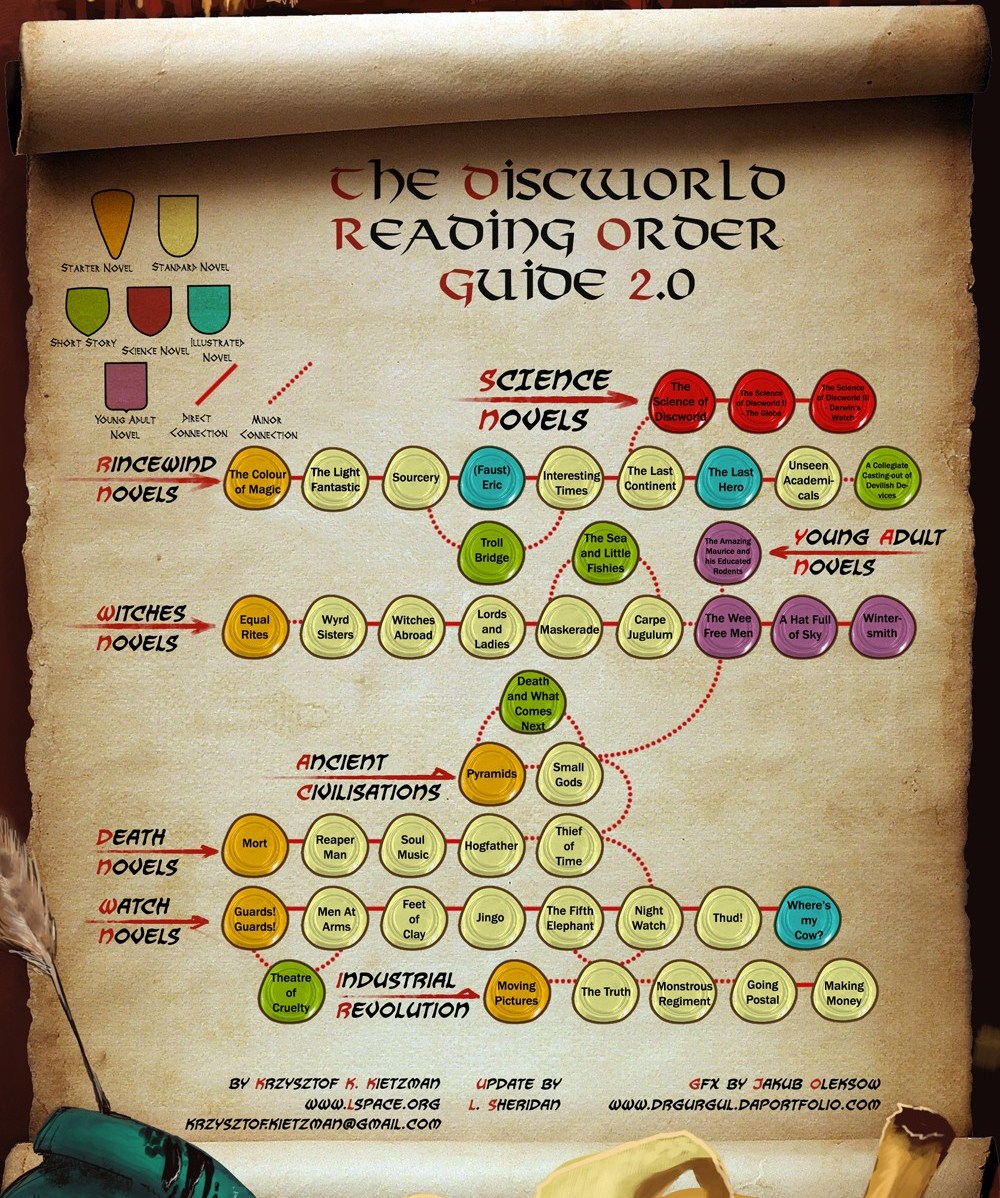
To drive home the point of just how much I loved this book, I went on to learn French just so I could read it in the original print.
Make sure it's the full, unabridged edition (1200 or 1400 pages), though!
(Just to throw in a nonfiction title as well, Bill Bryson's A Short History of Nearly Everything is a great gift for scientifically-inclined minds (esp younger ones) looking for a first foray into the world of nonfiction, wittily-written and well-narrated.)